Before Louisburg Says Yes or No: How to Read the Data Center Study and What It Means for Residents

When discussions about bringing a data center to Louisburg began circulating throughout the community, many residents had questions about what this could mean for their town. Would it create jobs? Could it affect electricity bills? How much water would it use? Would the town benefit financially, and would residents have a voice before decisions were made?
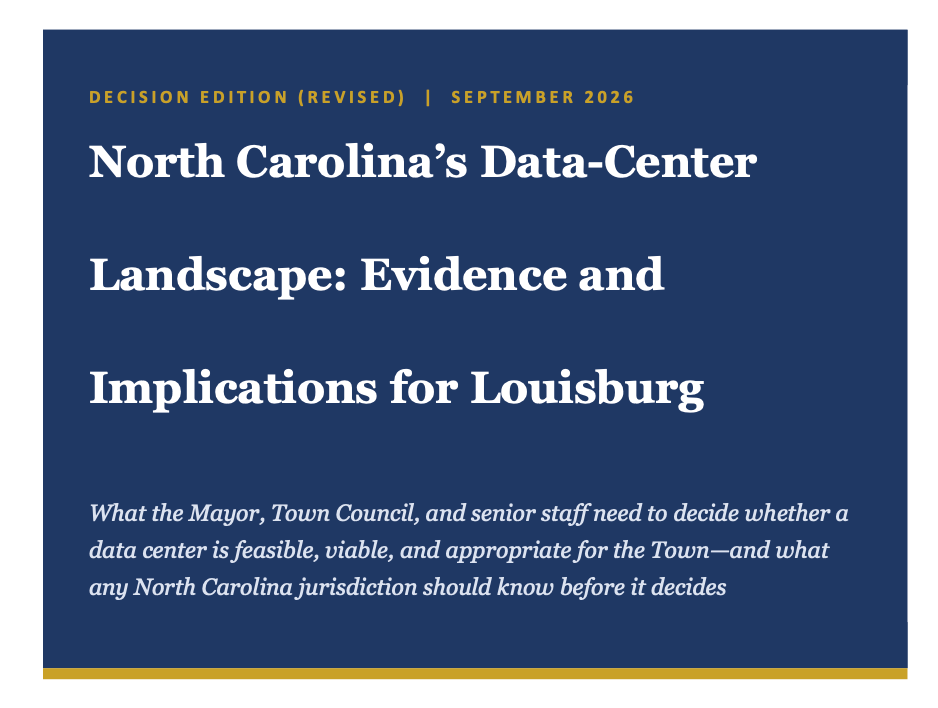
In September of 2026, a report titled North Carolina’s Data-Center Landscape: Evidence and Implications for Louisburg attempted to provide a framework for answering those questions.
The 44-page report, prepared by David B. Pyoas of D B Pyoas & Associates LLC, researched whether a data center could realistically operate in Louisburg and whether pursuing one would serve the town's long-term interests.
Here is what residents need to understand, what the numbers actually mean, and what happens next.
What Is the Study Actually Trying to Answer?
The report organizes Louisburg's decision around three tests and questions:
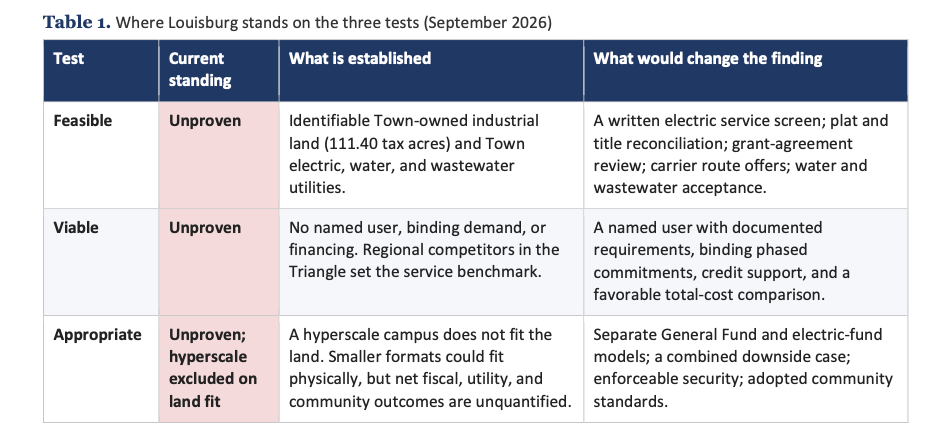
- Feasible: Does Louisburg have enough suitable land, electricity, water, wastewater capacity, and internet infrastructure to support a data center?
- Viable: Would a financially capable company actually choose Louisburg, pay the full costs, and commit to operating here?
- Appropriate: Would the development benefit the town and its residents after considering costs, risks, jobs, and alternative uses of the property?
As of September 2026, all three remain unproven. This matters because having available land doesn't automatically mean the town has enough electricity or water. Likewise, attracting a company doesn’t necessarily mean residents would receive meaningful economic benefits.
Note: The report requires all three questions to be answered favorably for the same proposed development.
Where Could a Data Center Go?
In the study, it identifies 10 town-owned lots within Louisburg's Commerce Park, totaling approximately 111.40 acres.
- 4 southern lots contain approximately 71.59 acres
- 6 northern lots total 39.81 acres.
- Identifies an existing, privately owned 11.22-acre industrial property at 62 T. Kemp Road as a possible redevelopment option.
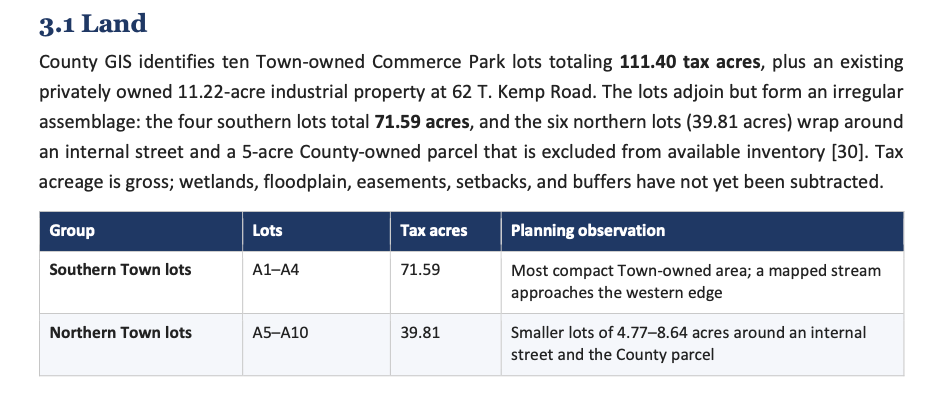
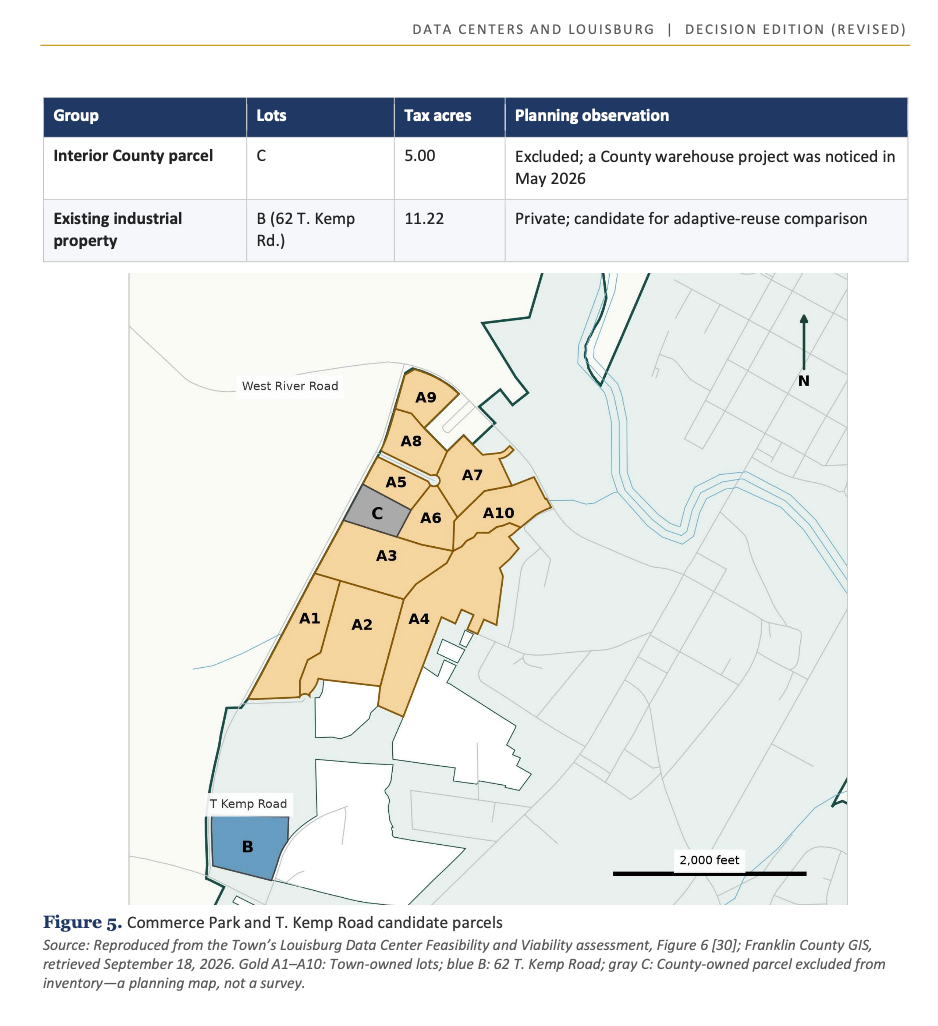
Note; These acreage figures do not account for wetlands, streams, setbacks, easements, or other development restrictions.
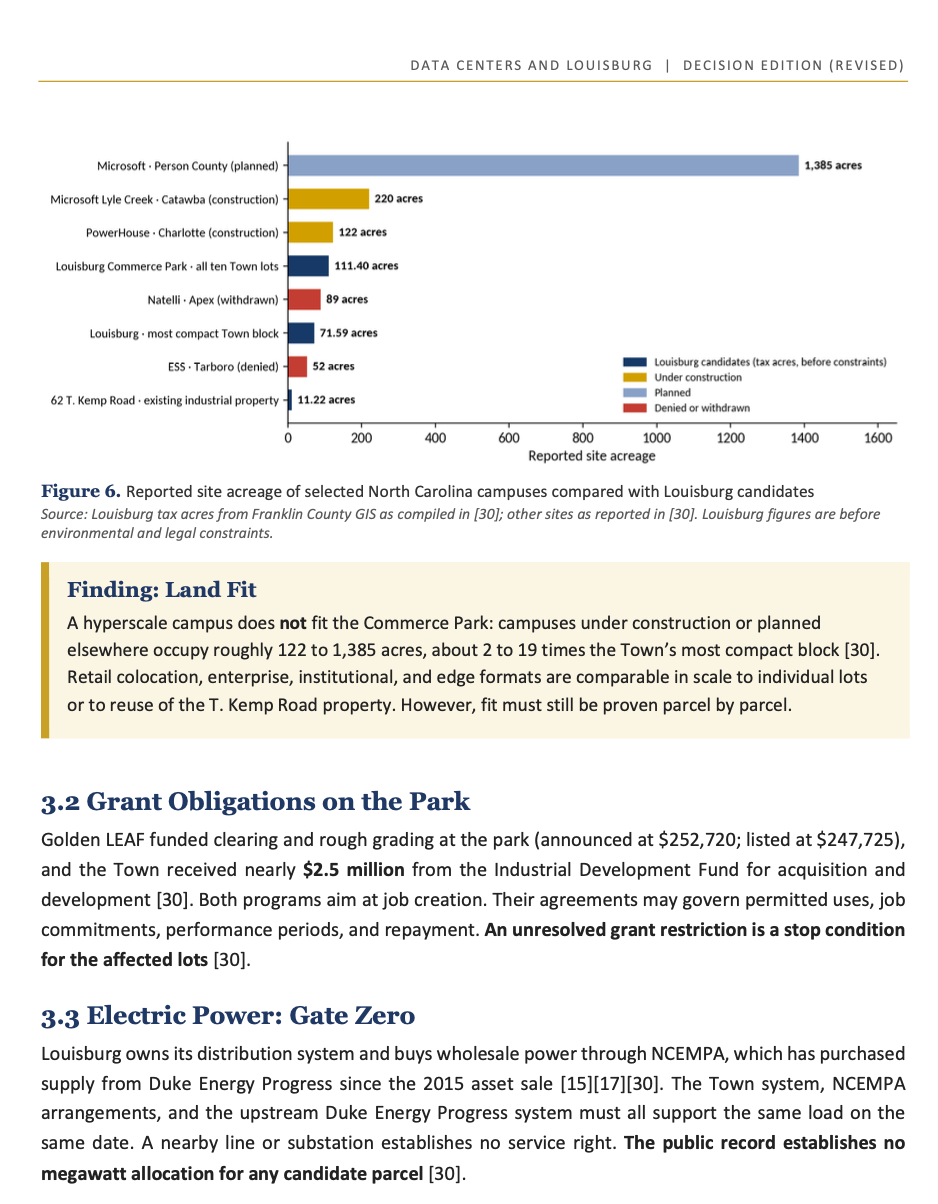
As a result, the study says that a massive hyperscale data center campus wouldn’t fit within the Commerce Park property. However, smaller facilities, including regional, institutional, and enterprise data centers, could potentially fit, but would require additional evaluation.
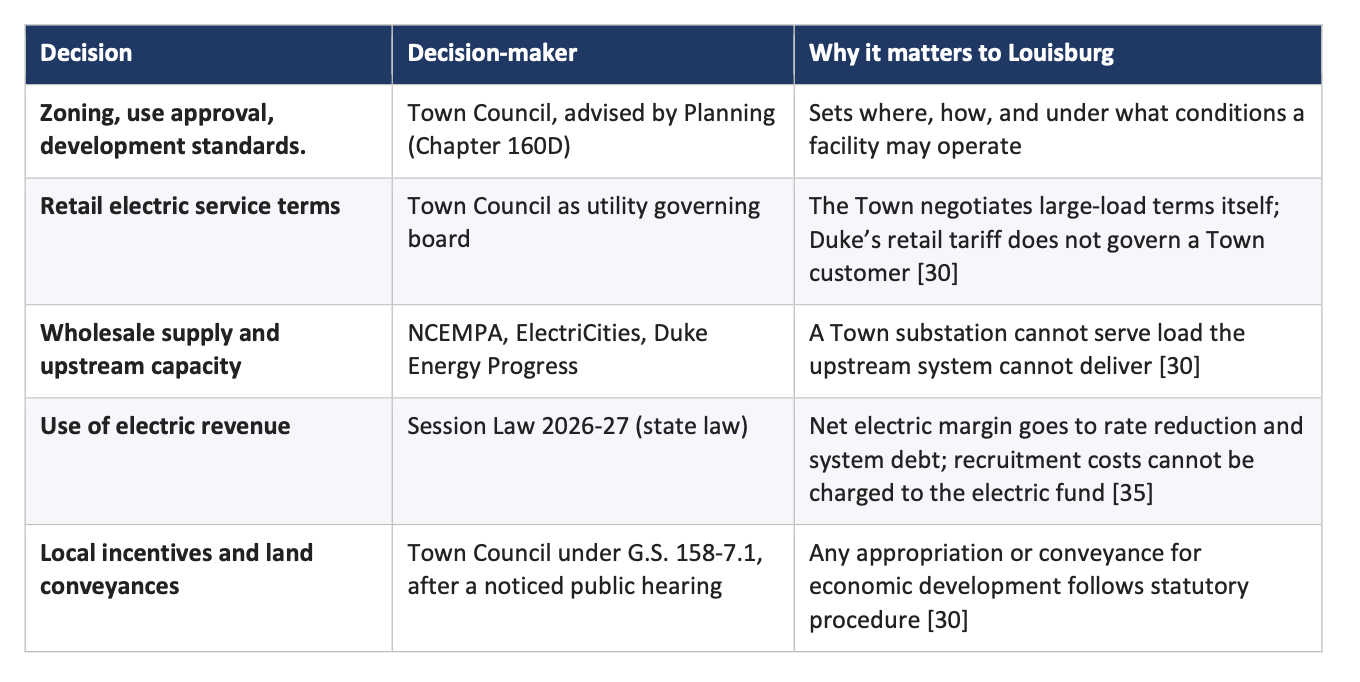
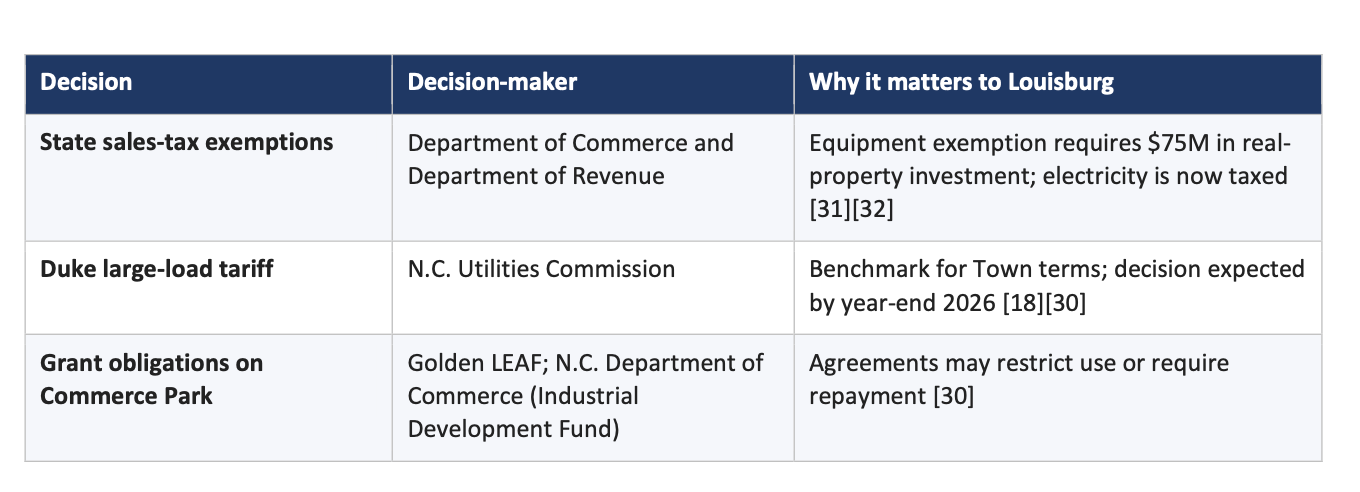
Another important consideration to keep in mind is that Commerce Park previously received nearly $2.5 million in Industrial Development Fund support and approximately $248,000 to $253,000 in Golden LEAF funding for land improvements.
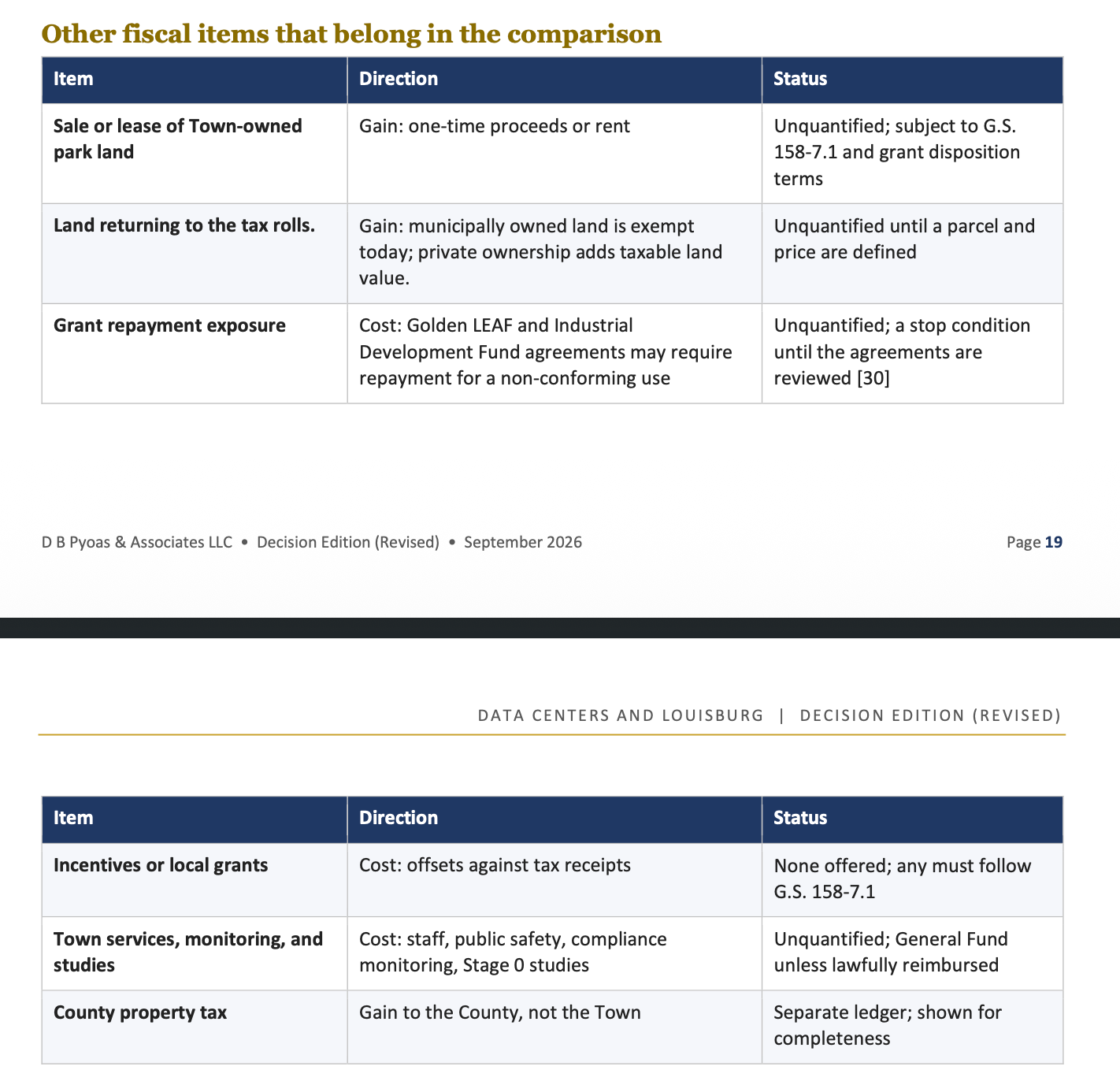
Note; Because these investments were connected to economic development and job creation, the town must review grant agreements to determine whether a data center would meet their requirements or potentially trigger repayment obligations.
- What this means for residents:
- Publicly owned industrial land represents an opportunity for future development, but choosing one use could eliminate opportunities for other employers.
Could a Data Center Affect Your Power Bill?
One of the biggest concerns in both this report and throughout the community is electricity.
Louisburg operates its own electric distribution system, purchases wholesale electricity through the North Carolina Eastern Municipal Power Agency (NCEMPA), and depends on upstream supply from Duke Energy Progress.
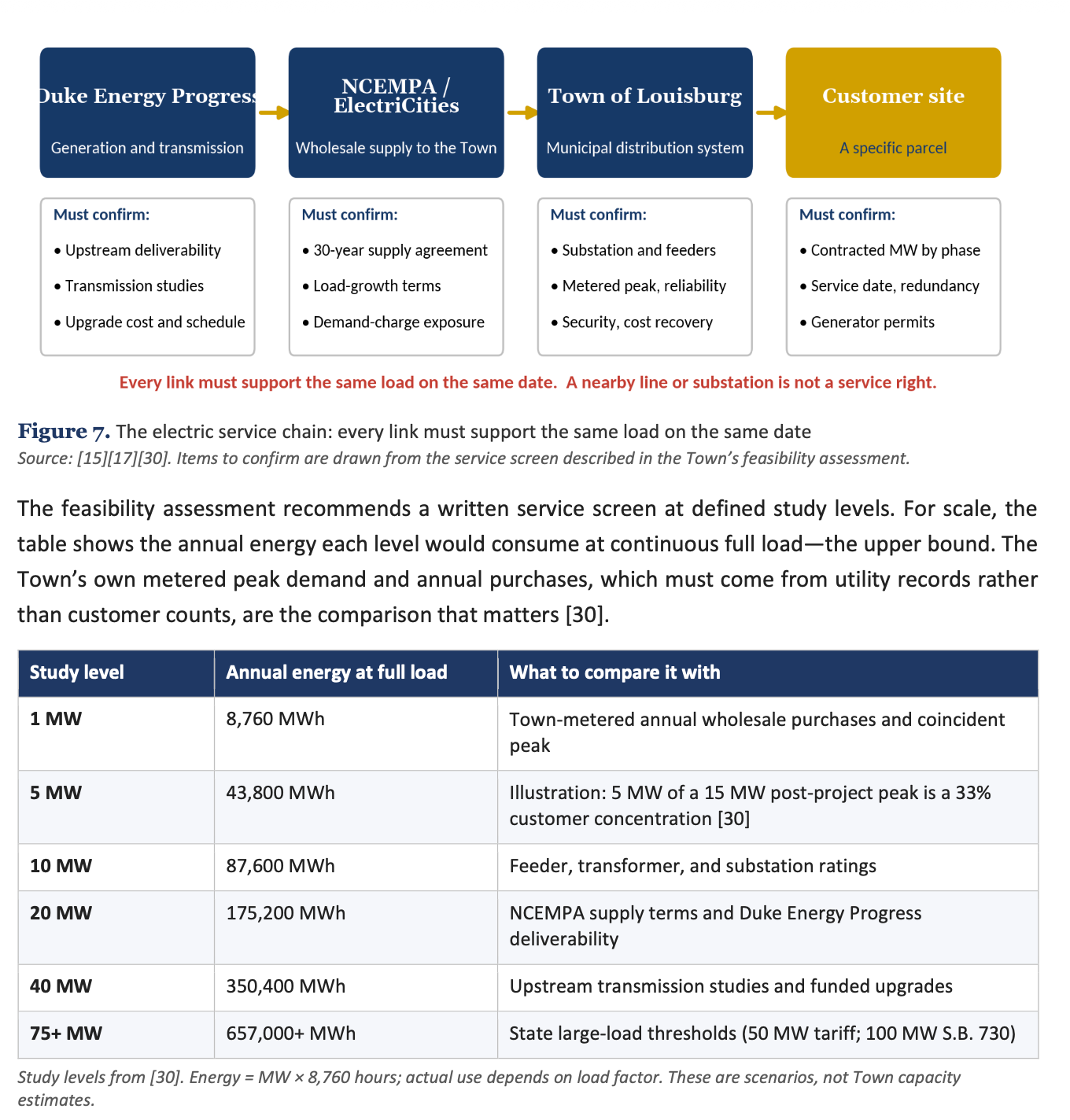
Because of this, the report recommends looking over potential data-center demands ranging from 1 megawatt to 75 megawatts or more.
Note: These figures are testing scenarios, not confirmed available capacity.
Now before any commitments are made, the town must determine whether its electric system could support a facility, what upgrades would cost, and who would pay for them.
This is extremely important because another major concern from residents is what happens if a company leaves after expensive electrical improvements have been made.
Under Session Law 2026-27, Louisburg's electric revenue must support authorized electric-system expenses, rate reductions, and system debt rather than general economic-development activities.
- What this means for residents:
- The town needs legitimate agreements protecting existing electric customers from paying for infrastructure built primarily for private development.
How Much Water is Really Available?
Another major concern among both residents and this study is water availability.
According to the town's 2024 water supply figures:
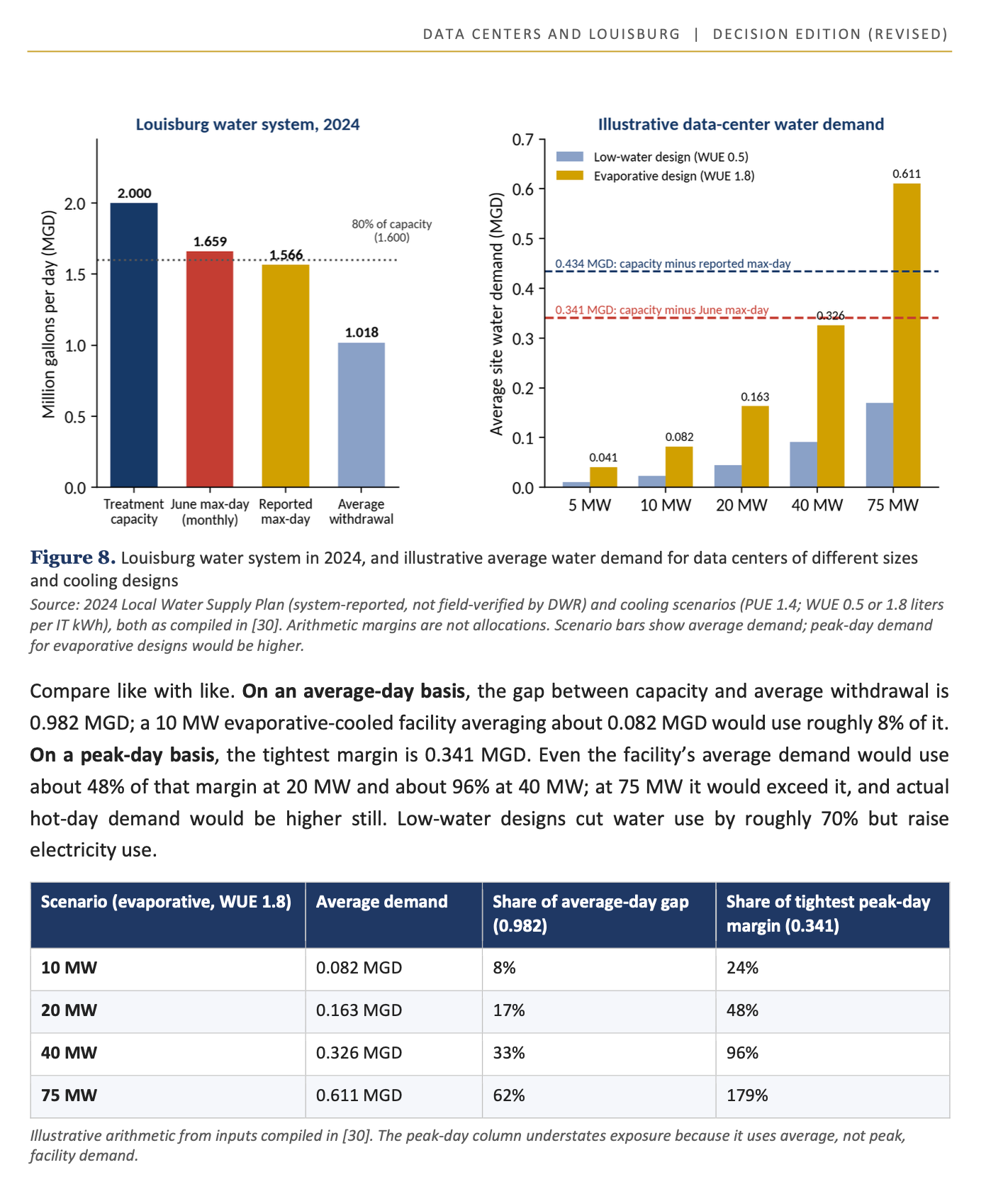
- Treatment capacity: 2 million gallons daily.
- Average withdrawal: 1.018 million gallons daily.
- Highest recorded June daily withdrawal: 1.659 million gallons.
- Remaining capacity on that peak day: approximately 341,000 gallons.
Key Notes:
- A 20-megawatt data center using evaporative cooling could use approximately 163,000 gallons daily on average.
- Represents nearly 48% of the town's estimated remaining capacity on its highest-use day, even before thinking about more water demand during extreme hot weather.
- Low-water design cooling systems could reduce water consumption but it will also require more electricity use.
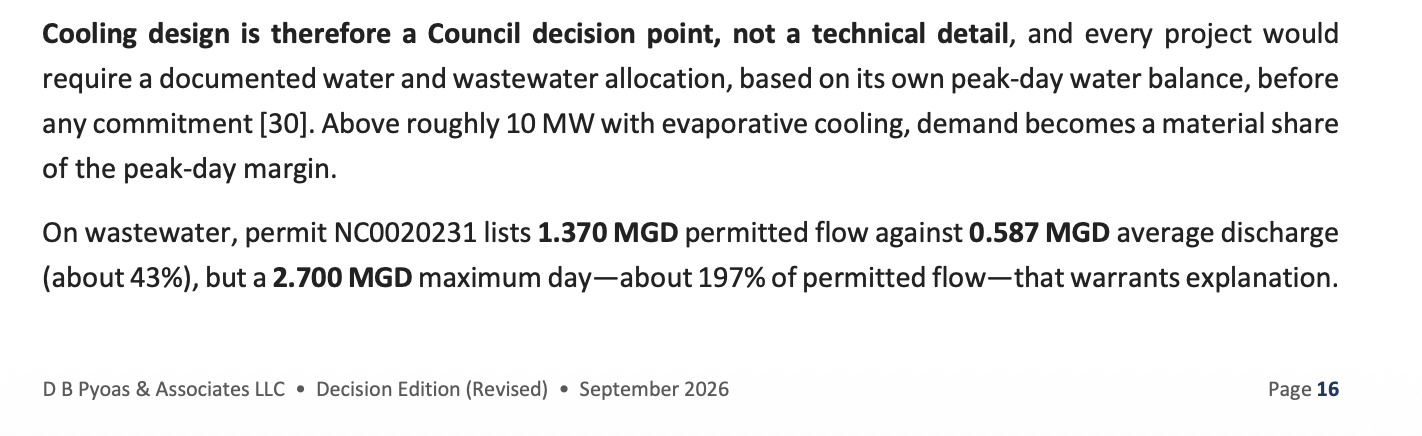
- Flags a wastewater concern: a reported maximum daily discharge of 2.7 million gallons compared with a permitted flow of 1.37 million gallons. That difference requires explanation.
What this means for residents:
- Water availability must be evaluated during peak demand and drought conditions, not simply on an average day.
Would Louisburg Benefit Financially?
When we think about economic development it often brings expectations of more jobs and tax revenue. However, the study warns us against relying on investment announcements alone.
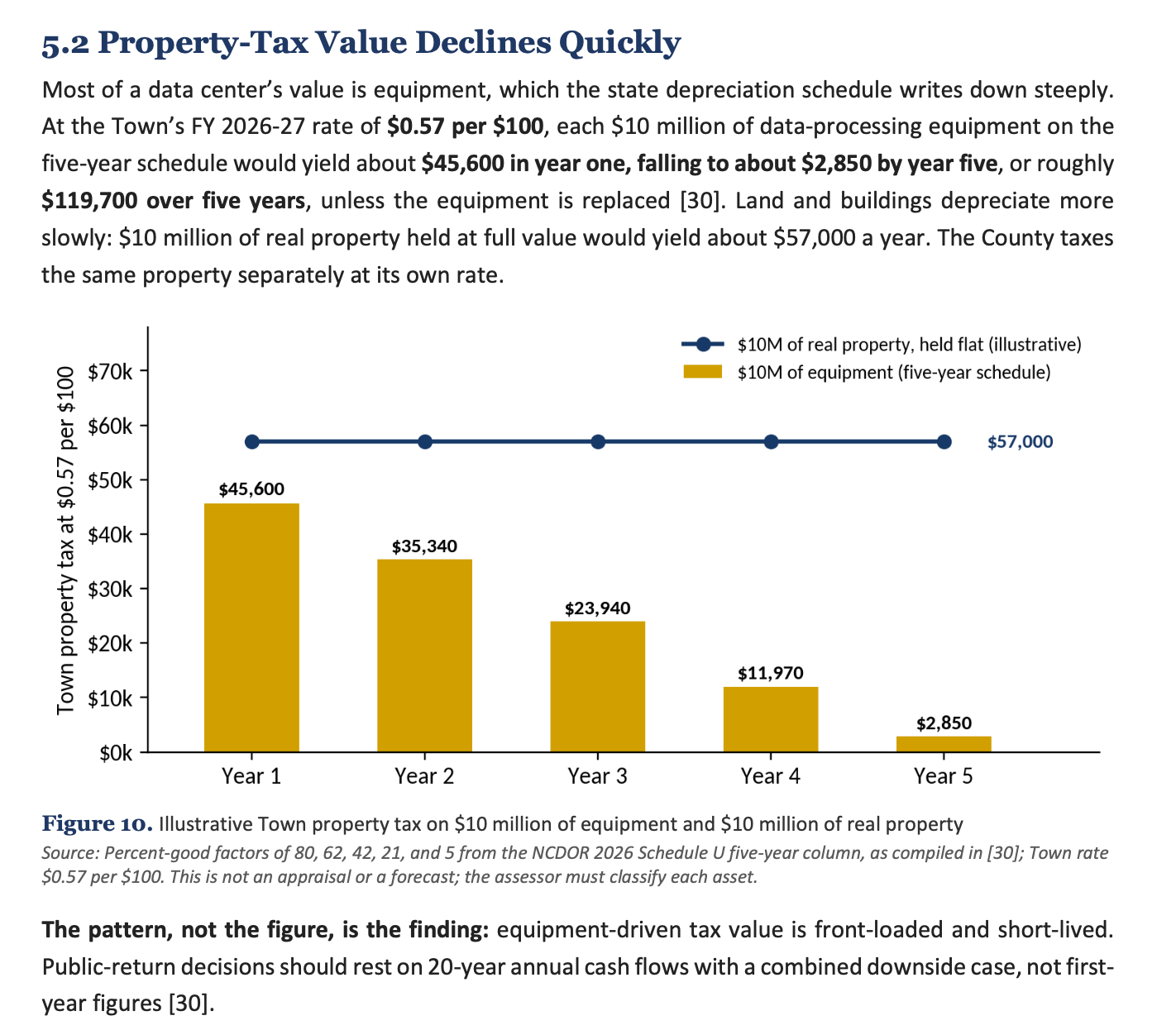
Using Louisburg's 2026–27 property-tax rate of $0.57 per $100 of assessed value, the study shows us how $10 million in qualifying computer equipment could generate approximately $45,600 in town property taxes during its first year, declining to approximately $2,850 by year five.
Note: Buildings and land follow different valuation patterns
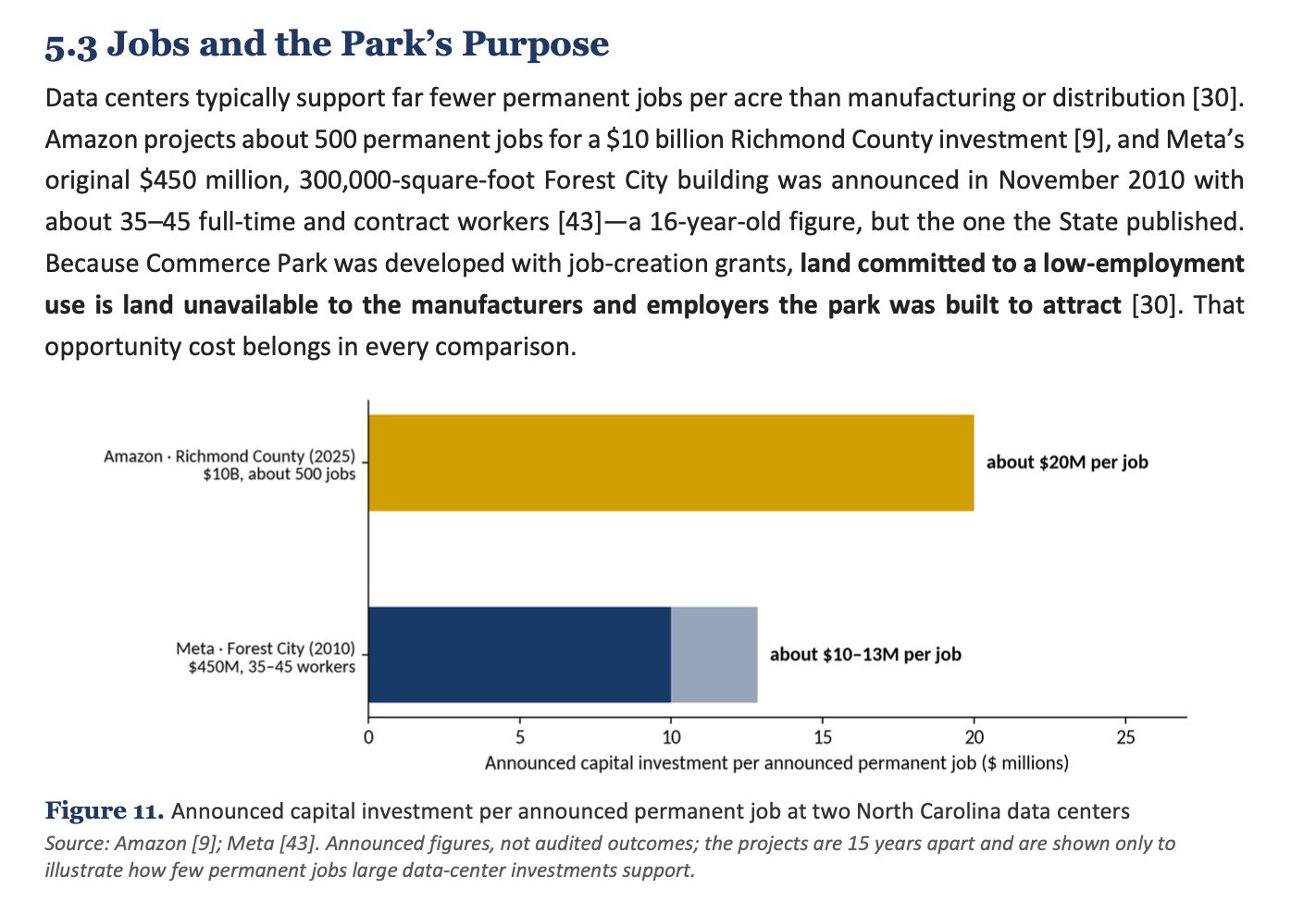
According to the study, data centers generally provide fewer permanent jobs per acre than manufacturing or distribution facilities.This matters because Commerce Park was developed partly to attract employment opportunities
The report recommends examining financial returns over 20 years while accounting for infrastructure costs, tax depreciation, incentives, public services, and other possible industrial uses.
- What this means for residents:
- This matters because Commerce Park was developed partly to attract employment opportunities. By allowing data centers that provide less jobs to come in will make it harder for companies like Amazon to provide hundreds of jobs to our residents.
What Should Residents Be Watching?
Now that we know the water and land impacts of data centers, let's talk about the community impact.
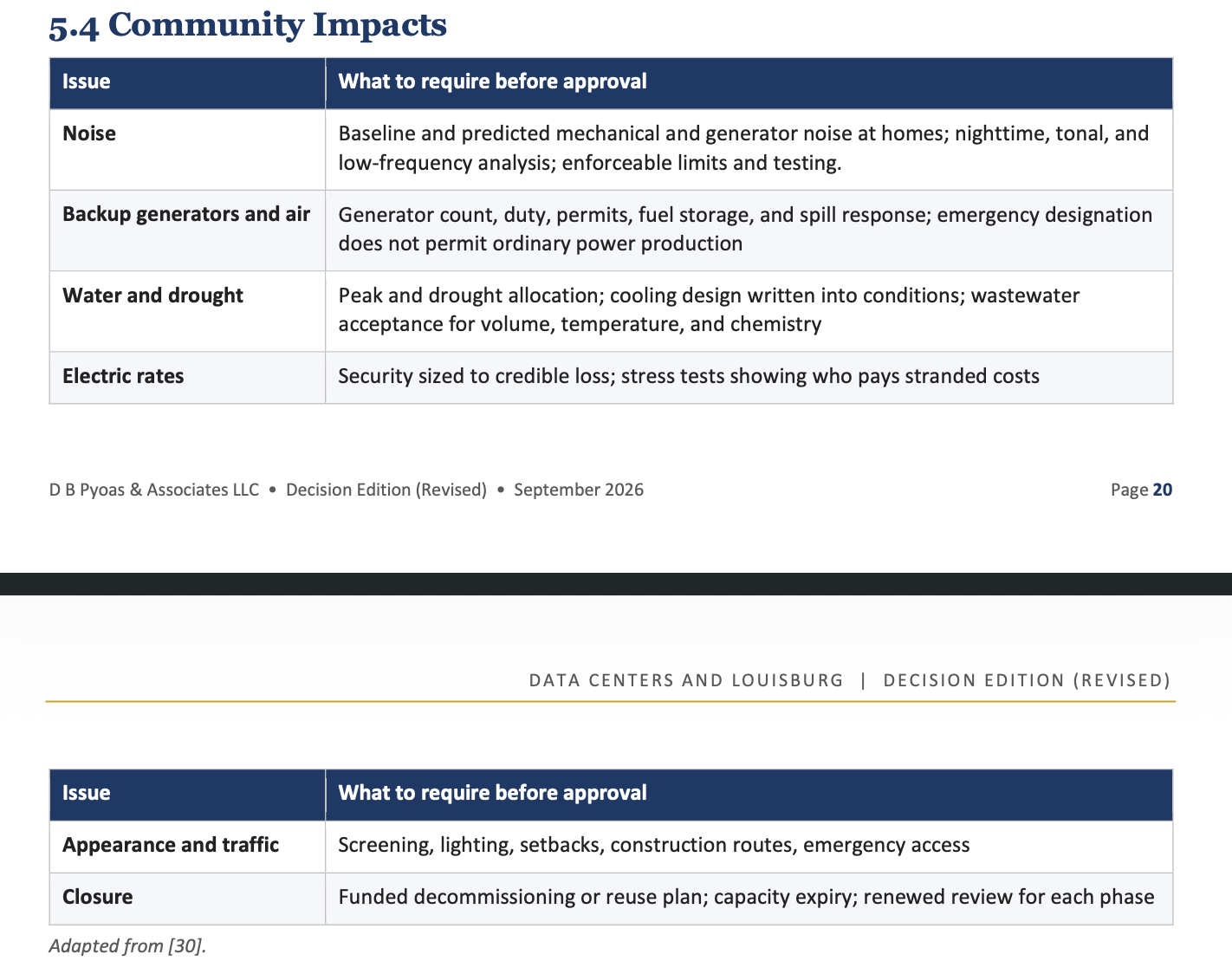
The study identifies several potential neighborhood impacts, including:
- Generator noise
- Air emissions
- Construction traffic
- Lighting
- Environmental protections
- And what happens if a facility eventually closes
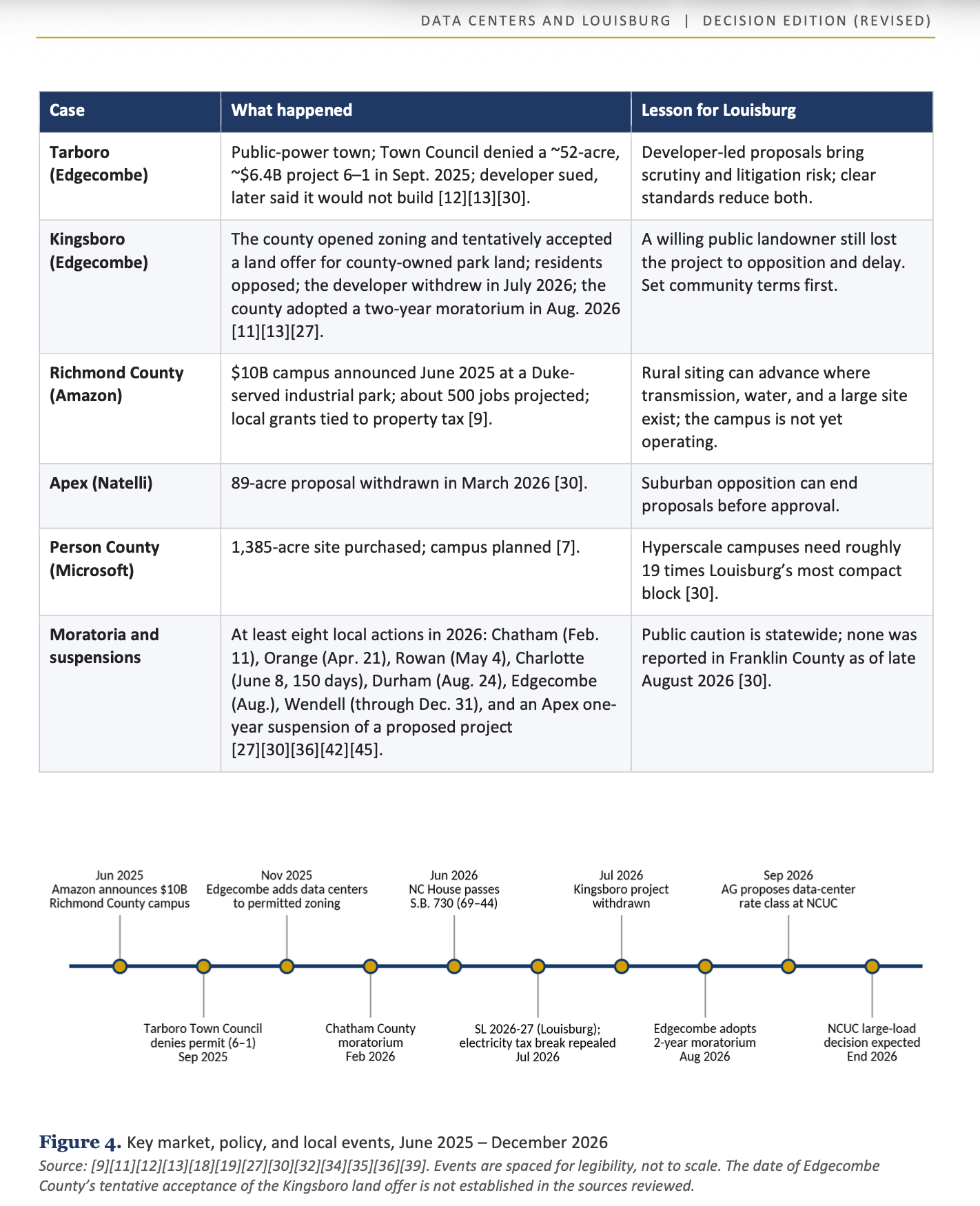
The study also shows us how other counties' experiences could be a lesson for Louisburg to pay attention too.
- What this means for residents:
- Establishing community expectations before considering individual proposals matters.
7. What Happens Next, and How Can Residents Participate?
The next step recommended by the study is Stage 0, an initial investigation to review property boundaries, grant requirements, electric service, water availability, and possible development costs.
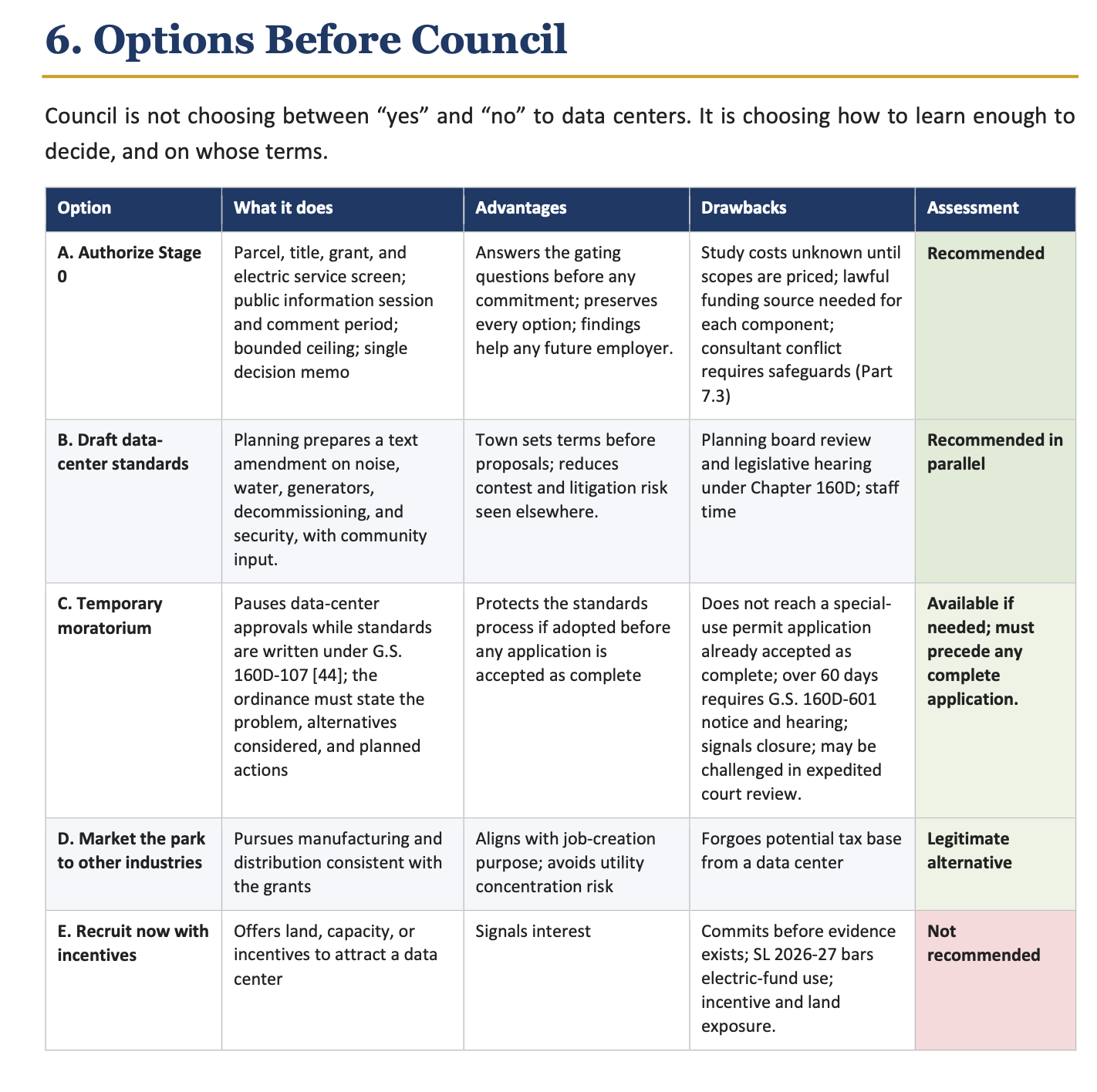
It also recommends a public information session, a written comment period, independent review, and development standards before any proposal advances.
Note: The study discloses that its author currently provides contracted services to Louisburg and that his firm could manage Stage 0 under a revised agreement. It recommends separate Council votes, independent review, and safeguards against financial conflicts.
- What this means for residents:
- Residents should understand that Stage 0 is a recommendation, not evidence that a data center has been approved.
- Be on the lookout for those public information sessions, and any updates.
Source: North Carolina’s Data-Center Landscape: Evidence and Implications for Louisburg, Decision Edition (Revised), September 19, 2026, David B. Pyoas, MPA.