How Franklin County Emergency Management Stays Ready

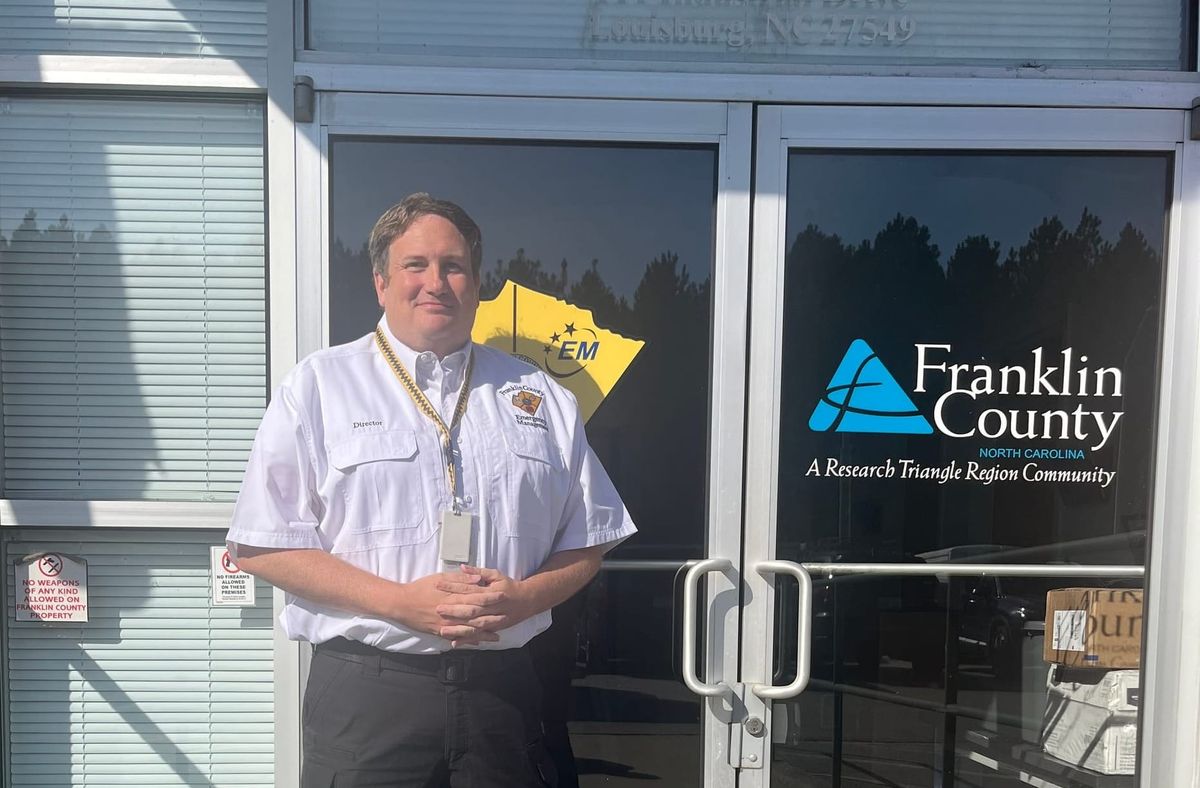
When an emergency requires more personnel or equipment than Franklin County has available, Nicholas Thorpe’s department is there to help connect local responders with outside assistance.
Most of us only see the uniforms that arrive to help out, but for Nicholas Thorpe, Franklin County Emergency Management Director, it's all part of a broader responsibility to make sure government agencies work together to help the community prepare, respond, and recover from disasters together.
Thorpe explains it like this:
"We want to make sure that when you call 911, there's someone there to answer the phone, that the power is on at our emergency service partners' locations, that police have enough resources to stop the bad guy, EMS has enough resources to handle the medical care of the community, and our fire departments have the resources and training that they need to put out the fires and solve the problems."
What is Emergency Management?
Most of us hear Emergency Management and immediately think "ambulances". But according to Nicholas Thorpe, Emergency Management is the bridge that helps keep things going.
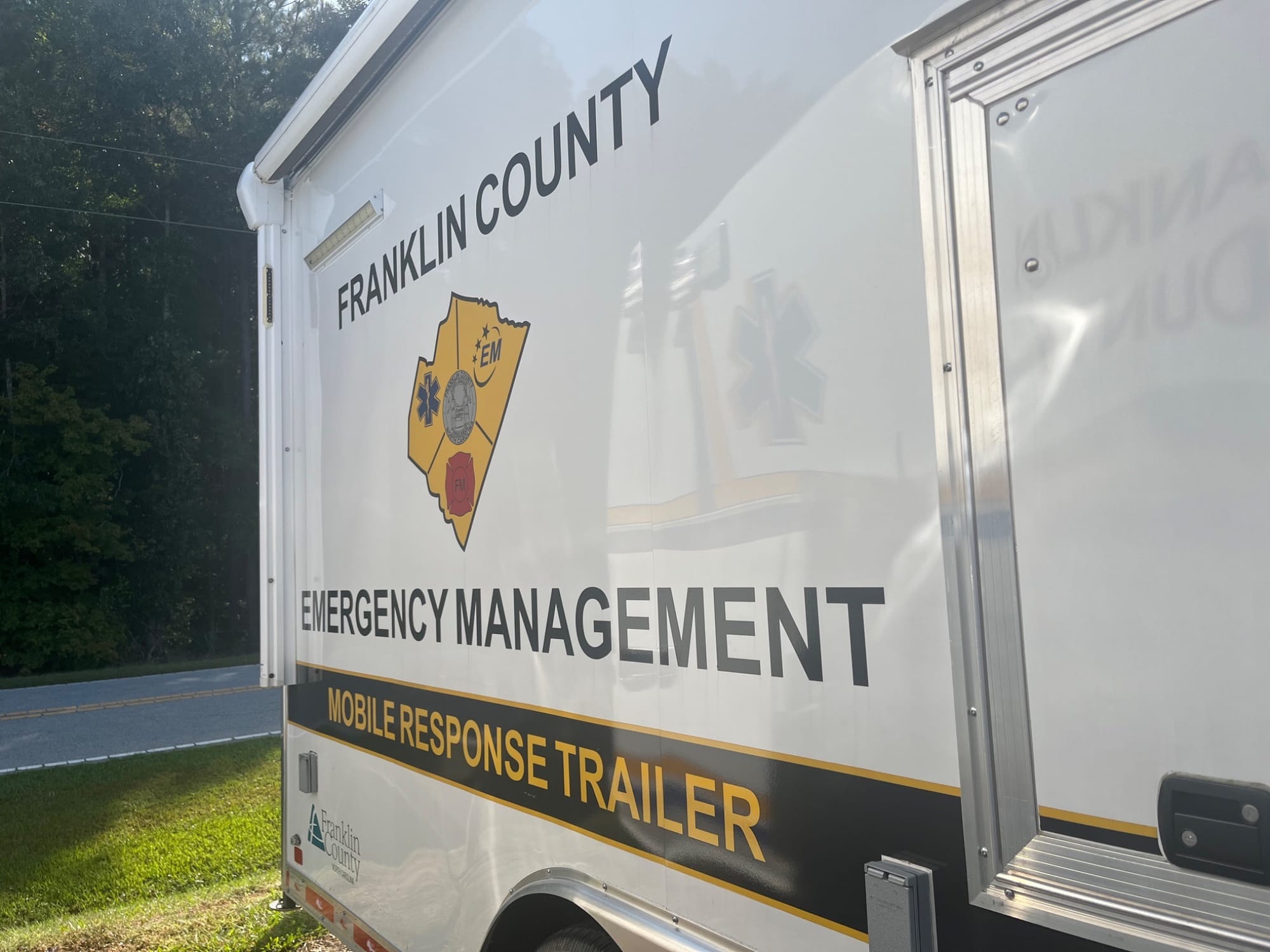
“We are the bridge between what the county can handle on their own and where resources are outside the county and how do we bring them in,” Thorpe said.
When additional crews and equipment are needed, or if the county needs more resources, Nicholas Thorpe and his team go out and get it.
Emergency Management works behind the scenes to connect local needs with additional resources, allowing our first responders to focus on helping the public on the front lines.
“So if we run out of ambulances or there’s too many patients, emergency management is that conduit to state and regional resources to get more help in to help EMS.”
A Small Team with Big Responsibilities
As Franklin County’s Emergency Management Director, Thorpe oversees the county’s emergency preparedness efforts and the Fire Marshal Division. But Thorpe doesn't do this work alone.

Alongside him on the staff team are:
- Janet Snotherly, Emergency Management Specialist
- Jennifer Watts, Administrative Support Specialist.
- Trey Evans, Fire Marshal.
- Michael Swiman, Deputy Fire Marshal.
“The great thing about our office, the flexibility and the camaraderie we have in our department, is everyone helps out anytime there’s an emergency or disaster,” Thorpensaid.
Nicholas Thorpe and his team also manage the County Emergency Operations Plan, a guide on how the county government organizes its response to major incidents, including planning for sheltering, temporary housing, debris removal and recovery in the event of storms or other major disasters.
“It’s our job to bring all the stakeholders or important players within county government and the community to figure out how are we going to rebuild and find our new normal after major disasters,” Thorpe said.
County Funding Equals County Support
We all benefit from Emergency Management’s help in some way, but do we know how they are funded? According to Nicholas Thorpe, county funding is the leading source that keeps them running, while grants help cover some salaries and equipment.
“County budget is probably the leading contributor to our department’s existence and sustainment, but we’re always looking for those grants opportunities because anytime we can take a little less burden off of our taxpayers locally through grants, through nonprofits or state entities or federal entities, only bolsters our ability to provide more services,” Thorpe said.
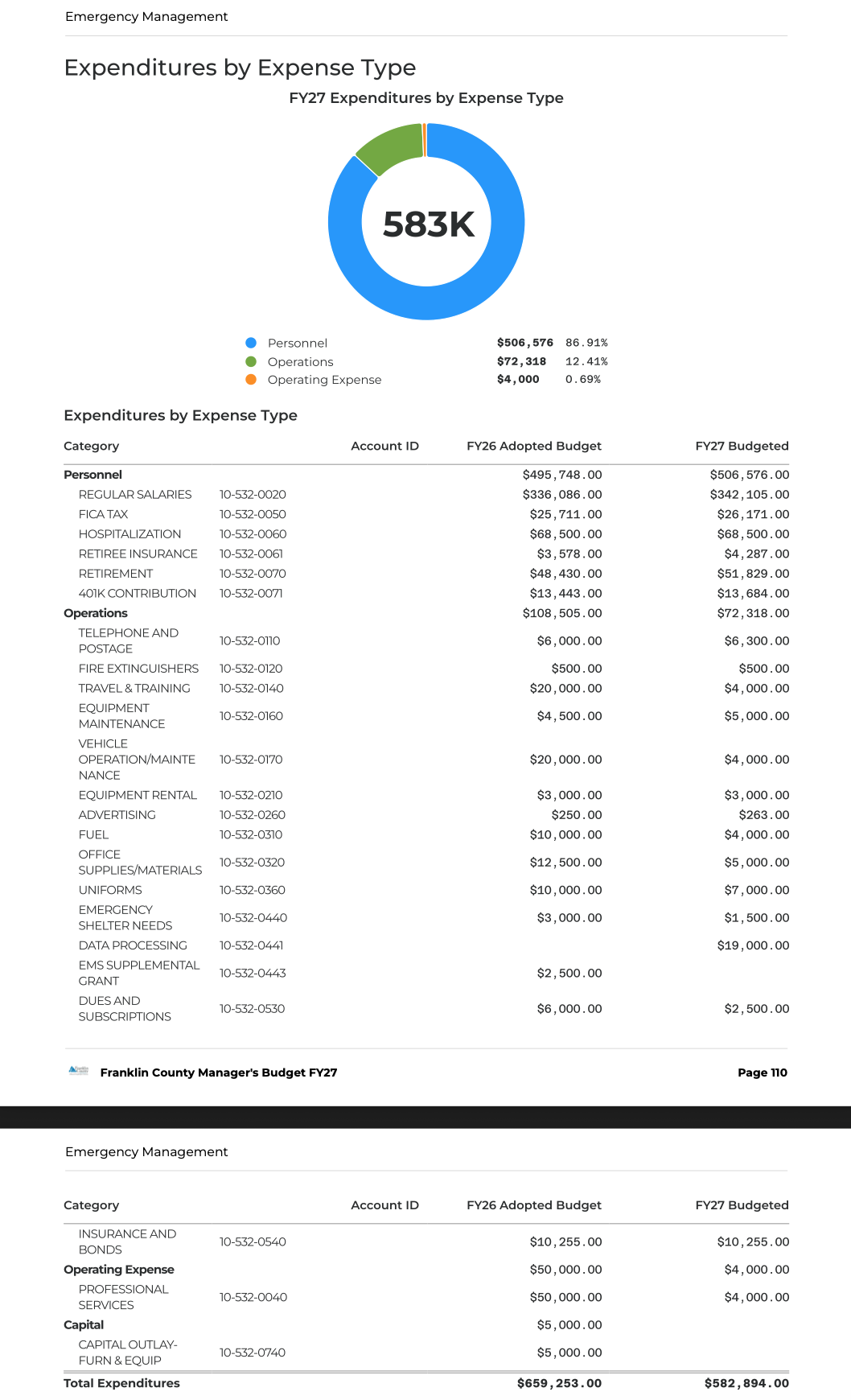
The county’s adopted fiscal year 2026–27 budget, on pages 109 through 111, lists:
- $582,894 in total Emergency Management expenditures, compared with $659,253 in the previous adopted budget.
- $506,576 for personnel, approximately 87% of the department’s budget.
- $72,318 for operations, covering expenses such as communications, training, maintenance and supplies.
- $4,000 for professional services, listed separately in the spending plan.
Connecting Property Taxes to Local Preparedness
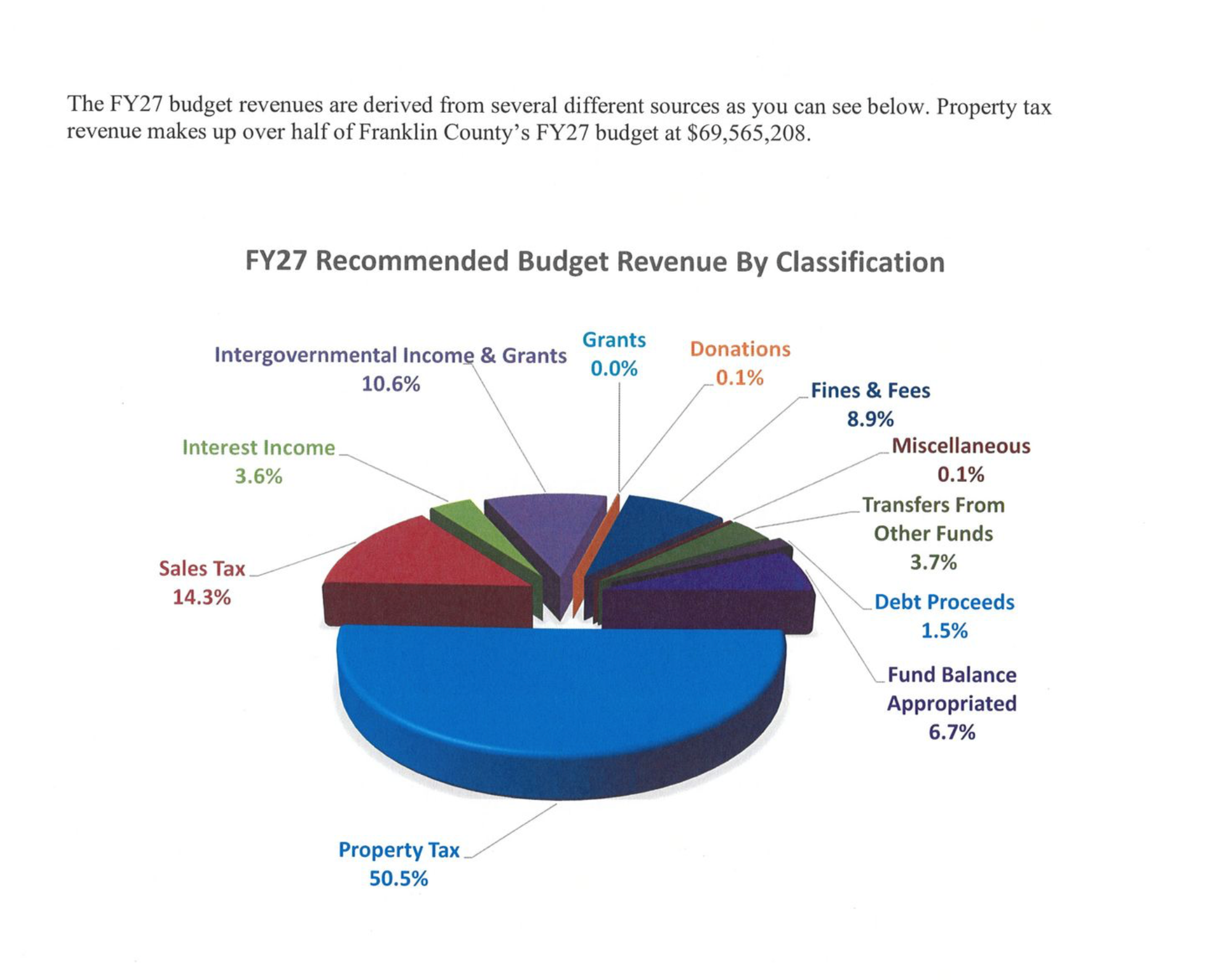
According to the county’s adopted budget, Property tax revenue makes up over half of Franklin County's FY27 budget at $69,565,208.
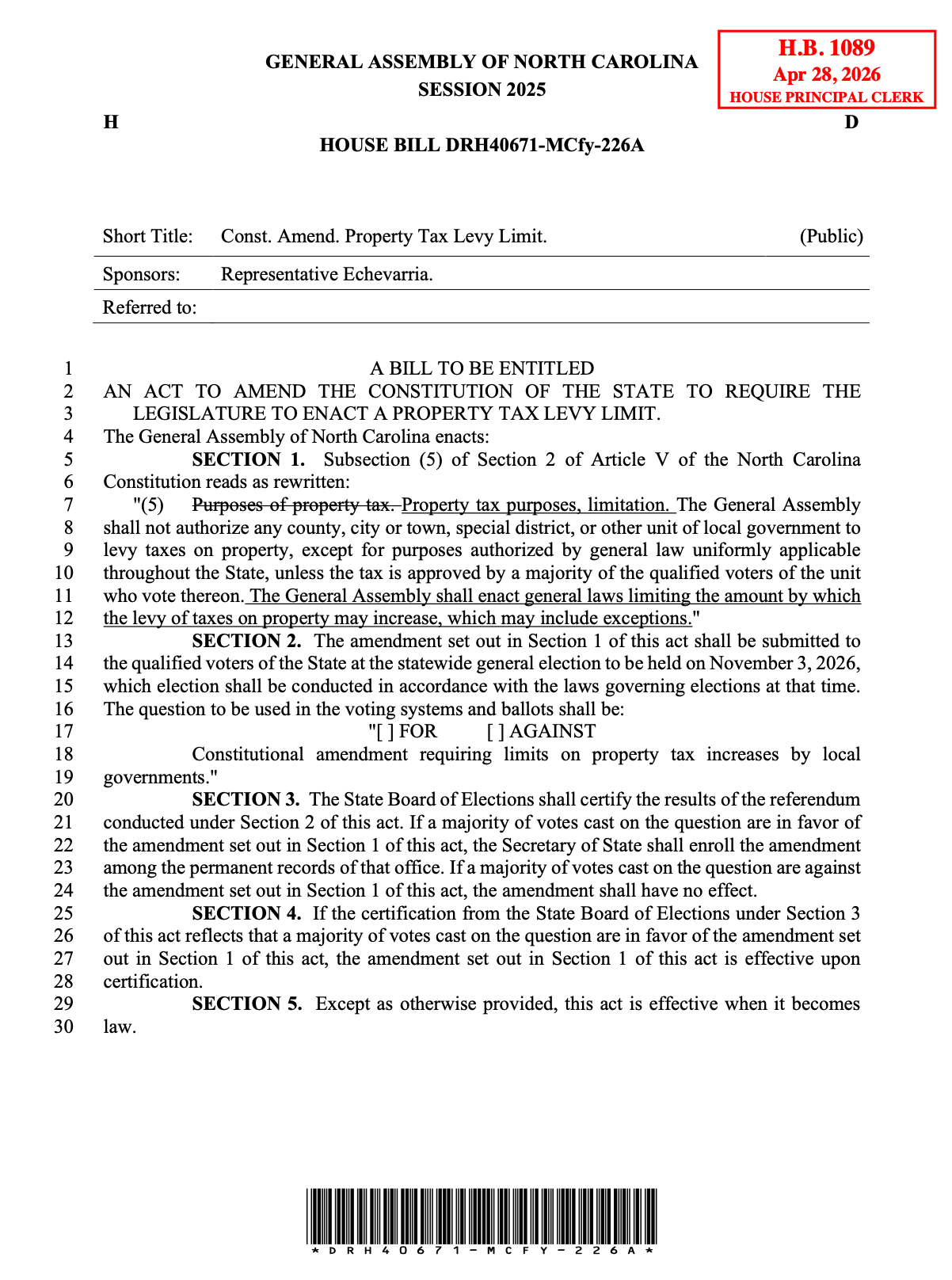
This is important to know because the proposed property tax amendment would require state lawmakers to establish limits on increases in local property tax levies, removing power from local officials to respond to our community's needs.
Thorpe’s Approach to Finding Resources
When I asked Nicholas Thorpe how the department would respond to potential cuts if the constitutional amendment passes, his response revealed both his leadership style and the way his department approaches being a good steward of community resources.
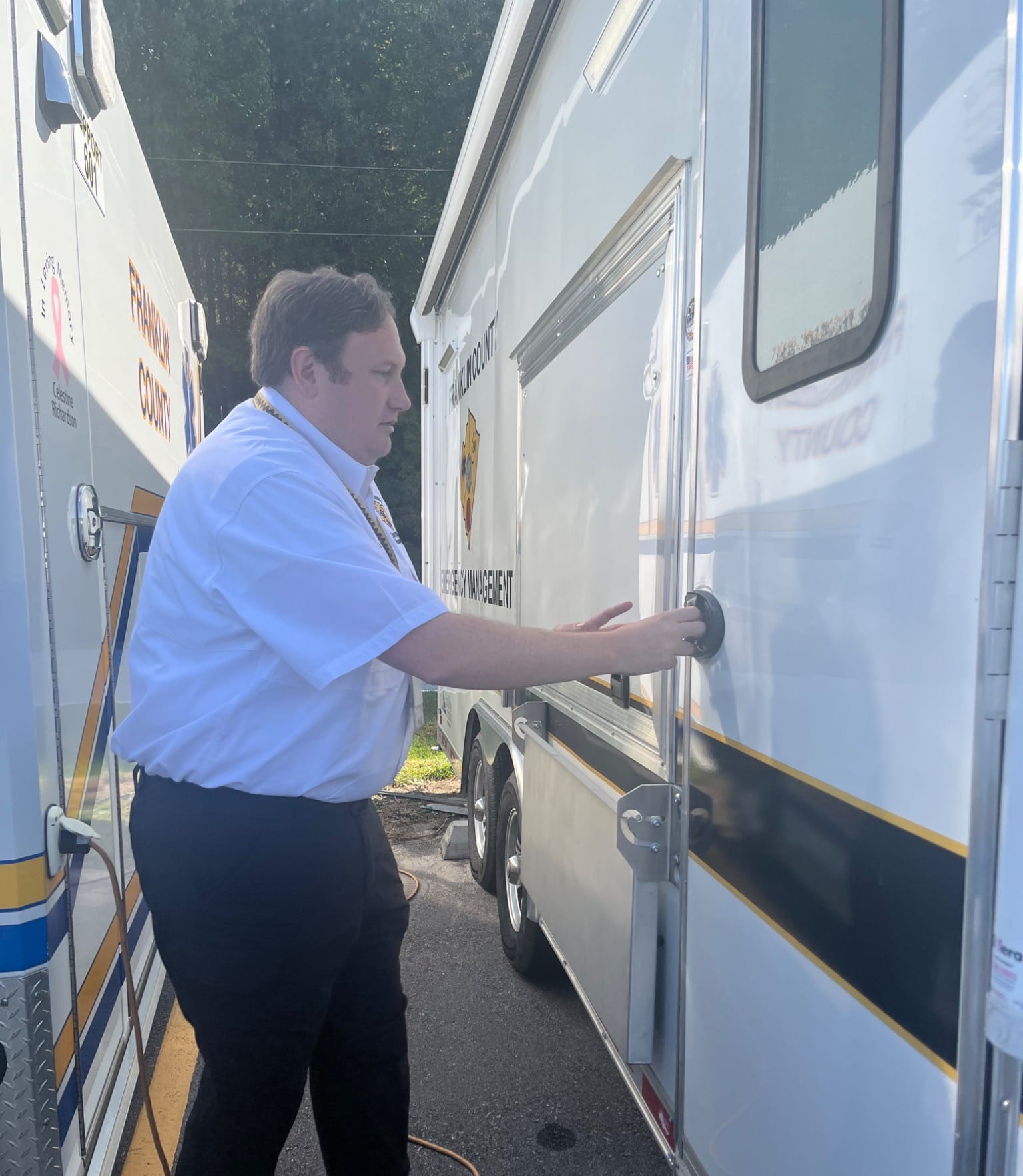
“If I don’t have the funds to purchase something for whatever reason, my job is to create a partnership or a collaboration with another county or the state in finding those resources.”
A Message From Nicholas Thorpe
One of the biggest challenges Emergency Management faces is keeping residents and county officials focused on preparedness when the community has not recently experienced a major disaster. Without an immediate threat, planning can become something people put off, even though the next emergency may arrive with little warning.
“Just because we haven’t seen a major disaster in the county doesn’t mean we’re not due for one, or it doesn’t mean it won’t happen tomorrow,” Thorpe said.

His message to Franklin County is to use the time before an emergency to prepare, rather than waiting until families are under pressure to make difficult decisions. Talking through a household plan, gathering supplies and knowing where to find reliable information can begin now, while residents have time to consider what their families would need.
“We want to make sure that we’re a trusted partner to the community so you know where you can get the up-to-date and accurate information on how you can be informed when bad things are happening so you can make the right decisions for you and your family to be safe,” Thorpe said.
He said residents can visit the Franklin County Emergency Management website, along with ReadyNC.gov and Ready.gov, for information that can help households prepare.