Franklin County Residents Want To Know What Is Going On With Their Water. County Beacon Is Looking for Answers.

“Over the past couple weeks we noticed the water in our home smelling & tasting odd - a mildew smell & earthy taste,” said Franklinton resident Taheisha Coleman. “We don’t drink the water in our house because of things like this.”
Franklin County social media sites have been lighting up with community members reporting that their water smells musty, earthy or like mildew, tastes different, appears discolored or contains visible material. People are reporting that the smell doesn't go away after running their water or even using refrigerator filters.
“I noticed the taste at other places,” added Coleman. “The local restaurant, the water cooler at my team’s football practice, the water I brushed my teeth with. After seeing others complain about the same thing, I realized it was a widespread issue and it was likely tied to the county water system. Out of precaution, we’re not using the water unfiltered.”
Because of this, County Beacon is investigating Franklin County's water system to learn what is happening, what official water-quality records show, what the people responsible for providing and regulating the water are saying, and what can be done to correct this issue.
What Has the County Told Residents?
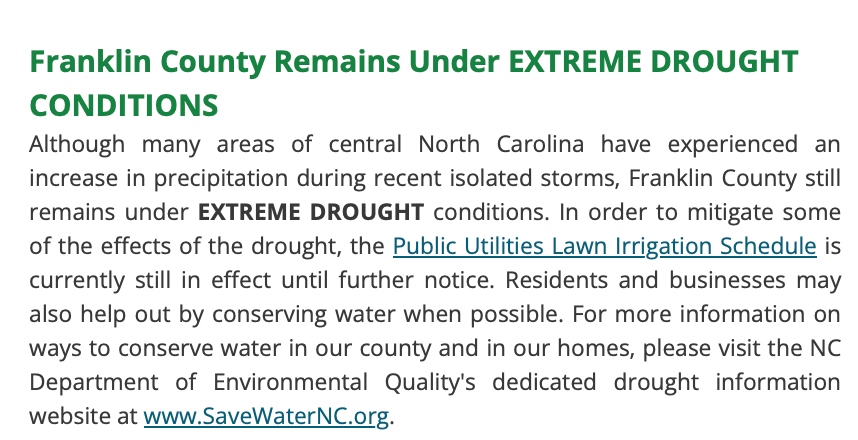
Since this issue has gone viral in our community, some residents have been demanding answers. According to a response shared publicly, officials said the taste and odor issue was “only aesthetic” and that the water was safe to consume. Officials also said the issue is due to the lack of rainfall and drought conditions. Franklin County's public utilities page also says the county remains under drought conditions and that its lawn irrigation schedule remains in effect.
But residents deserve more than summaries and reassurance. They deserve to understand what is happening, what the testing shows and what is being done about it.
What Official Records Show
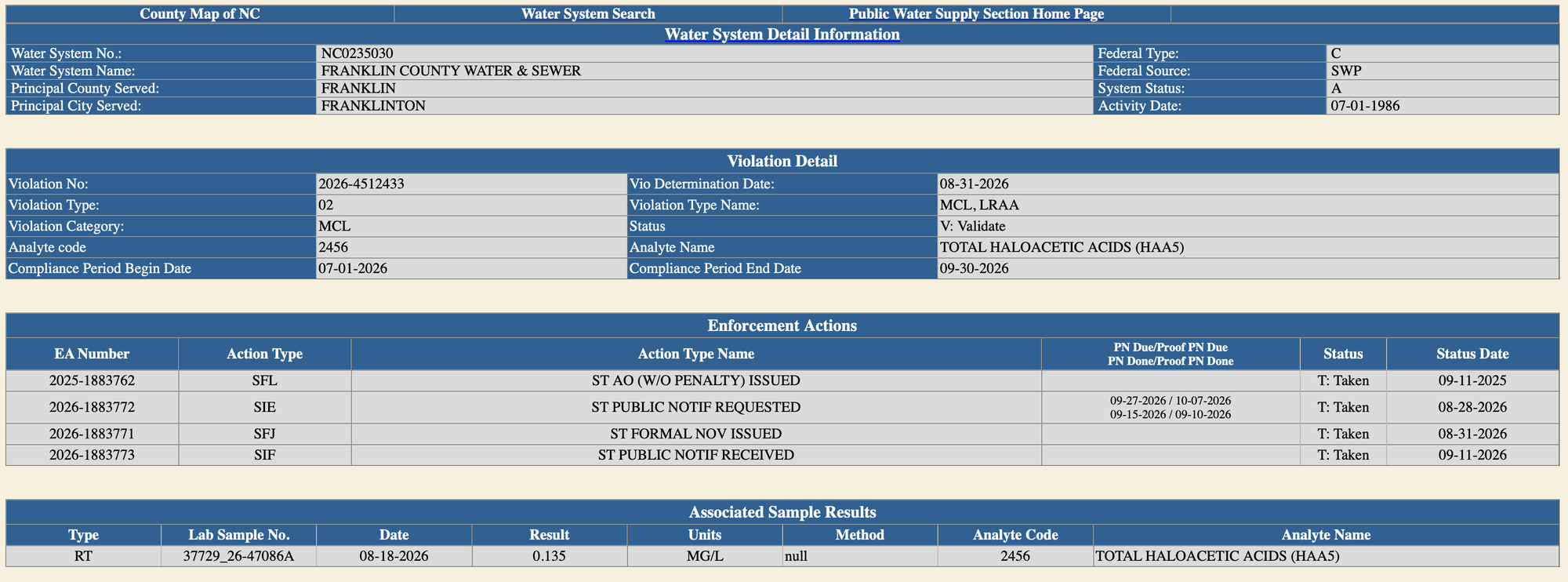
According to North Carolina's Drinking Water Watch, the Franklin County Water & Sewer System ID NC0235030, shows an August 31, 2026 violation involving Total Haloacetic Acids, or HAA5. HAA5 are a group of chemicals that can form when disinfectants used to treat drinking water react with naturally occurring organic material. This violation came after a sample collected on August 18 showed HAA5 levels of 0.135 mg/L. North Carolina's drinking-water standard for HAA5 is 0.060 mg/L, or 60 parts per billion.
According to the state's HAA5 public-notification template, a HAA5 Maximum Contaminant Level (MCL) violation is not considered an immediate emergency and does not trigger a boil-water notice or a change in residents’ normal routines.
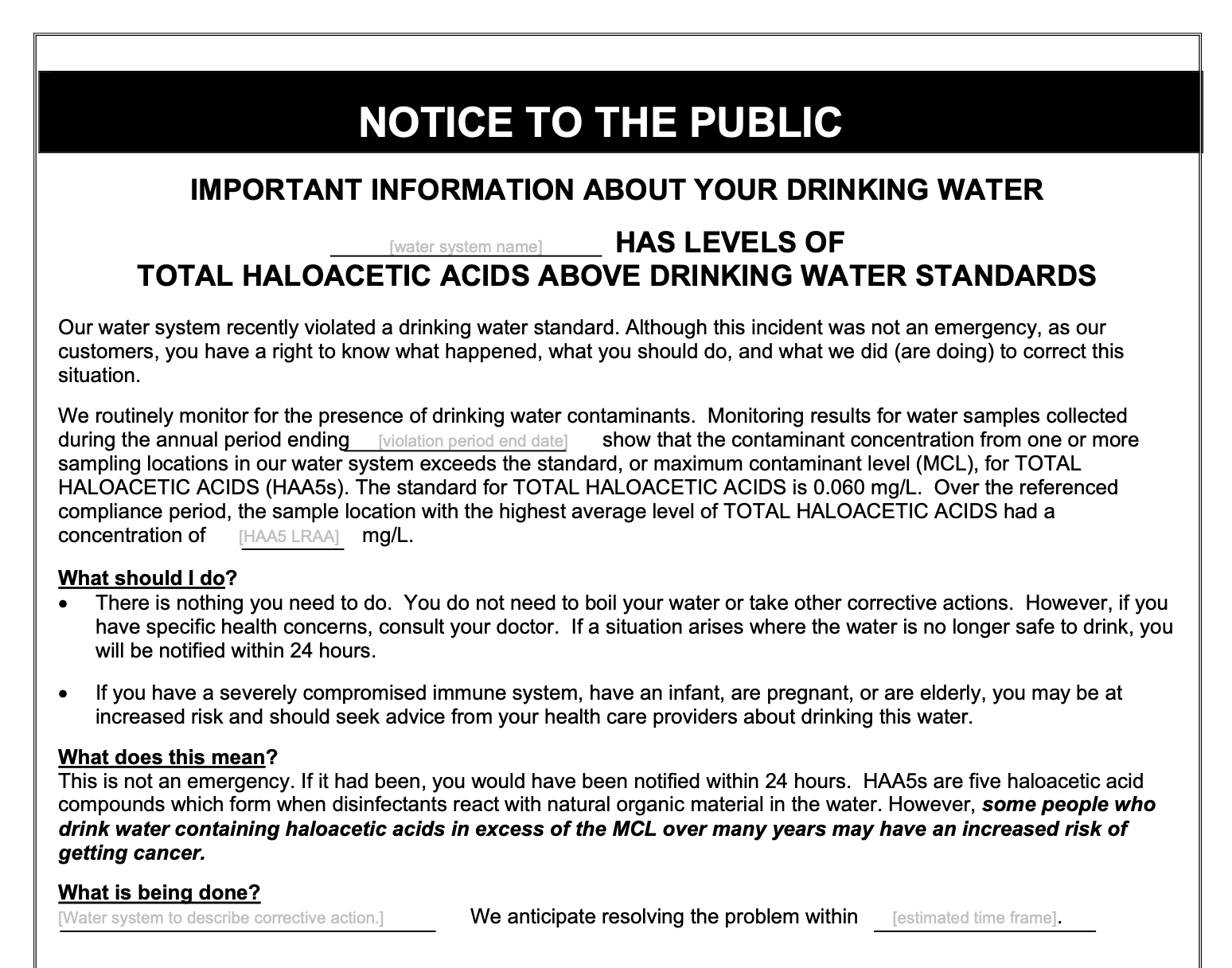
However, the notice does warn that “some people who drink water containing haloacetic acids in excess of the MCL over many years may have an increased risk of getting cancer.”
State records show Franklin County was notified before the violation was formally determined on August 31. On August 28, 2026, the state entered “ST PUBLIC NOTIF REQUESTED,” meaning the state requested that the water system issue the required public notification. A formal Notice of Violation followed on August 31.
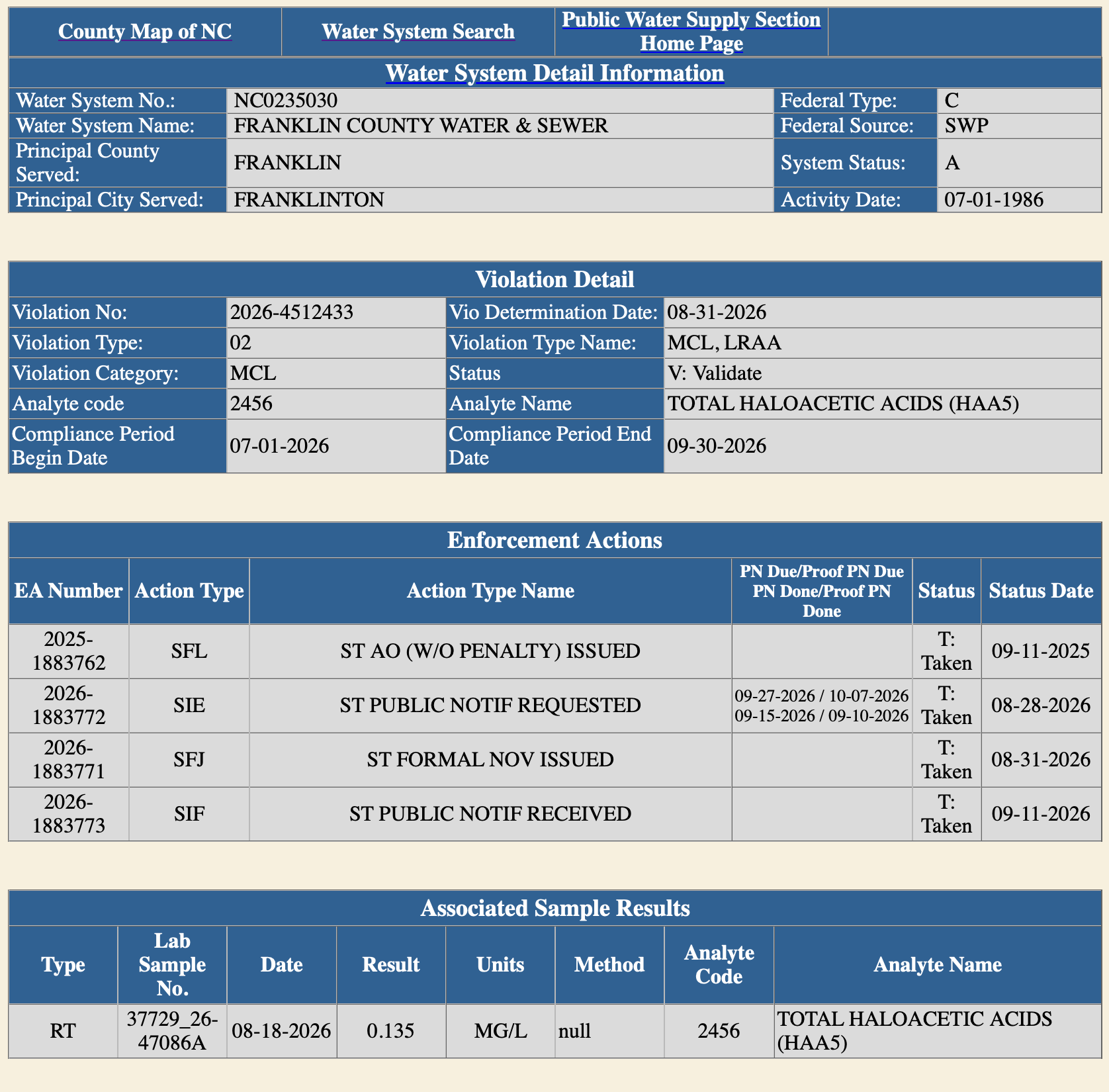
The record then shows “ST PUBLIC NOTIF RECEIVED” on September 11, meaning the state received public-notification documentation from the water system. However, that entry does not tell us when residents actually received the notice or how it was delivered.
Under North Carolina's Tier 2 rules, HAA5 MCL violations generally require public notification as soon as practical, but no later than 30 days after the system learns of the violation. So based on the August 28 state action, it wouldn’t be right to say Franklin County has missed its notification deadline.
Prior to the 2026 Maximum Contaminant Level violation, Franklin County in 2025 received two HAA5 monitoring violations which were reported in the county’s 2025 Annual Drinking Water Quality Report, The county also reported that the required reports had been submitted and that it was in compliance.
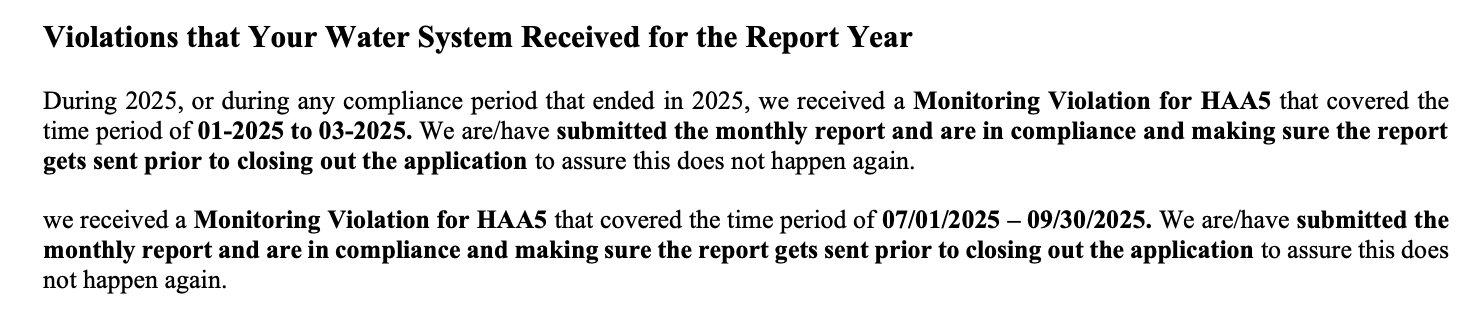
It’s important to note that a monitoring violation is not the same thing as a violation for exceeding maximum contaminant levels.
What’s Next
We don’t know if the HAA5 violations are related to the reported changes in Franklin County’s municipal water. County Beacon has reached out to state and local officials to understand what’s happening and what’s being done to fix it.
We also want to hear from you.
If you are a Franklin County water customer and have noticed unusual smell, taste, color or sediment in your water, County Beacon wants to document your experience.
Tell us where you live generally, who your water provider is, when you first noticed the problem, what you experienced, whether you reported it to the utility and what response you received. If you have photographs, videos, water-test results, emails or other documentation, we want to see those too. Email us at countybeacon@beaconmedianc.org.
Our community deserves clear answers about what’s happening with our water, when officials knew about it and what is being done now.
Links for residents to review: