What Do Proposed Tax Cap Amendments Mean For Our Communities?

More specifically, what happens to our schools, public safety, and everyday services if our counties continue to grow but the money flow doesn't keep up?
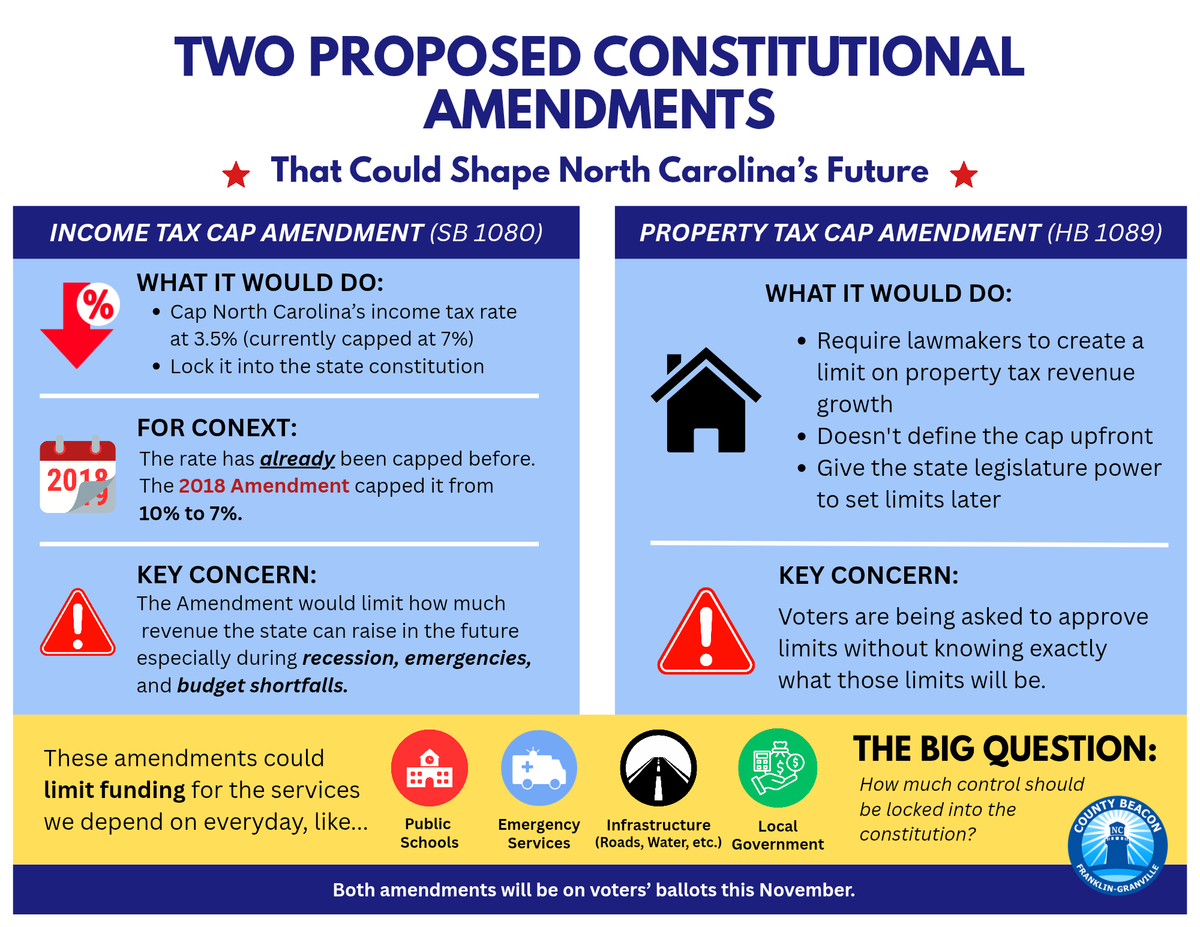
I found myself asking this question as I started reading about two proposed constitutional amendments that would cap the state income tax rate and limit how much local governments can raise through property taxes. If you just read the ballot language (these amendments will be put to voters this November) you might think it's simple. Everyone wants lower taxes, right? But when you do some research, the story becomes an eye opener.
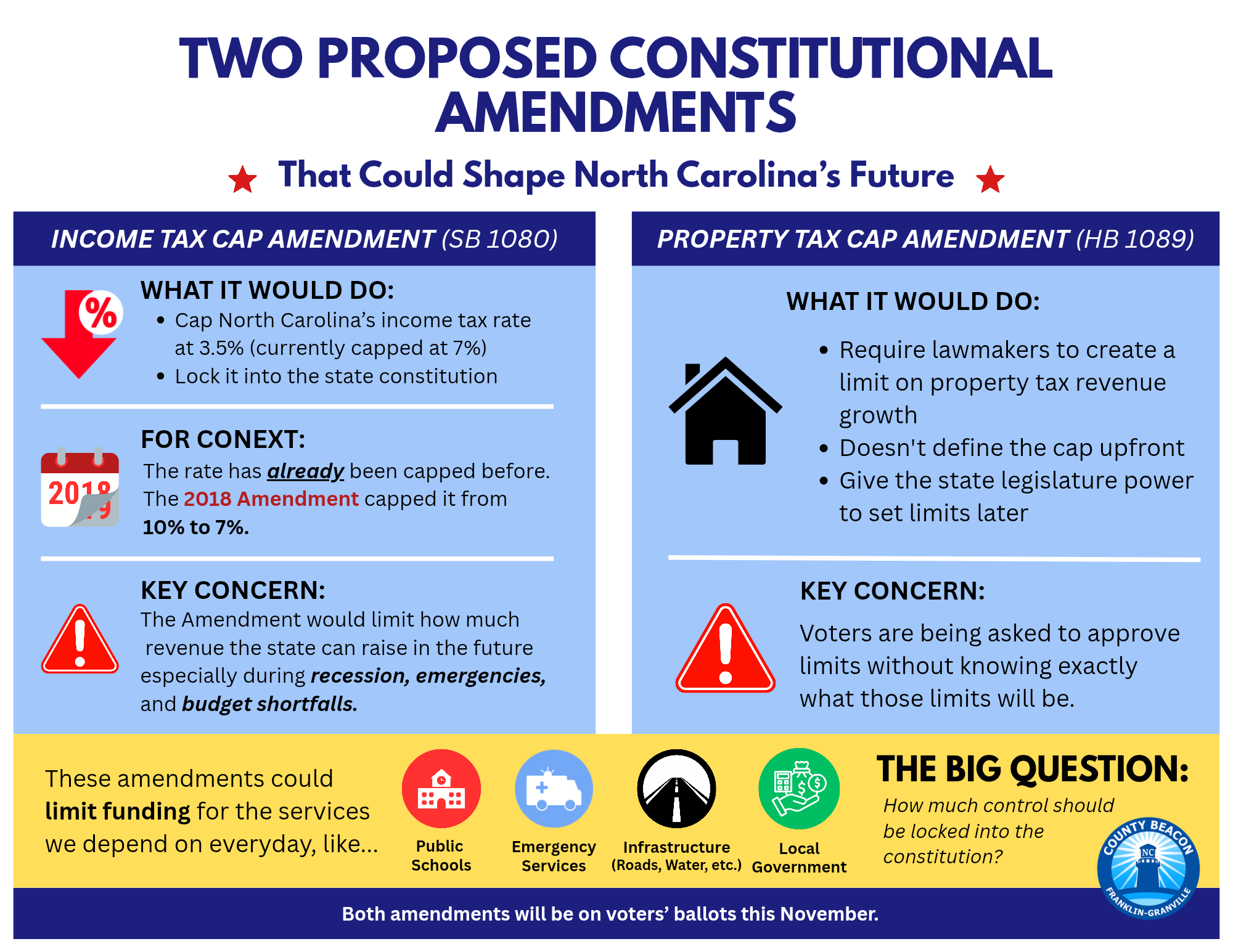
What Supporters and Opponents Are Saying
Supporters say:
- These amendments protect homeowners from rising taxes
- They make living more affordable
- They force government efficiency
Opponents say:
- They could lead to service cuts
- They reduce local decision-making power
- They create long-term budget gaps
- County Managers around NC are warning that the impact could be severe, especially in smaller counties.
The Bottom Line:
Counties rely heavily on local property taxes to fund everything from local schools to emergency services to public safety and parks and recreation. In both Franklin and Granville Counties, property taxes account for more than half of the revenue that pays for this infrastructure and services. Sales tax is a distant second as a source of local revenue.
County Budget Basics
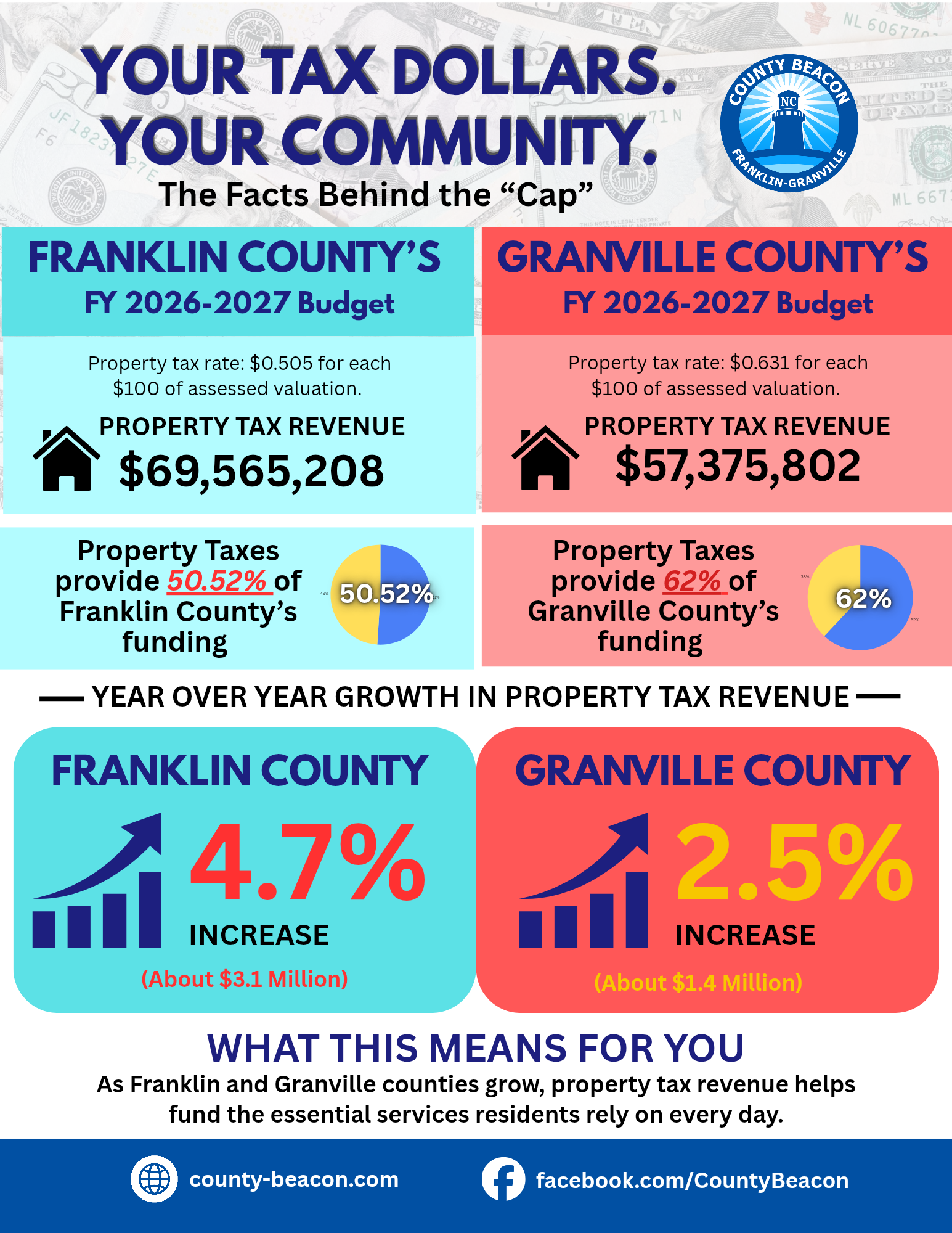
Franklin County’s FY 2026–2027 Budget
- Total Budget (General Fund): $131,700,799
- Property Tax Revenue: $69,565,208
- 50.52% of the county’s general fund revenue comes from property taxes
- Sales Tax Revenue: $19,650,000 (14%)
Granville County’s FY 2026–2027 Budget
- Total Budget (General Fund): $92,941,476
- Property Tax Revenue: $57,375,802
- 62% of the county’s funding comes from property taxes
- Sales Tax Revenue: $18,184,541 (20%)
In both counties, property taxes are the largest single funding source. Both counties also rely on growth in property tax revenue each year to maintain services.
- Franklin County saw a 4.7% increase (about $3.1 million) in 2026
- Granville County saw a 2.5% increase (about $1.4 million) in 2026
The Hidden Cost of Tax Caps
Every year, our counties face rising costs:
- Inflation
- Population growth
- Teacher and staff salaries
- Infrastructure repairs
- Emergency services
But under a cap, local officials could not raise property taxes, even in an emergency. Local governments would either need to cut services or raise more revenue from other sources, like the sales tax. Even if taxes stay low, the cost of running a community does not.
Public Education Advocates Are Alarmed
When funding is capped, schools are often one of the first places to feel the impact. Local governments have been supplementing state investment in public schools for years. A state income tax cap coupled with a local property tax cap could leave schools without options to raise necessary operating revenue. This is why local organizers are coming together to help the communities both understand it and how to prepare and be proactive.
Concerns include:
- Delayed building repairs
- Larger class sizes
- Fewer teachers and support staff
- Less flexibility to respond to student needs
Upcoming Community Meeting:
Franklin Public School Families Emergency Lunch & Learn

Where do our local elected leaders stand?
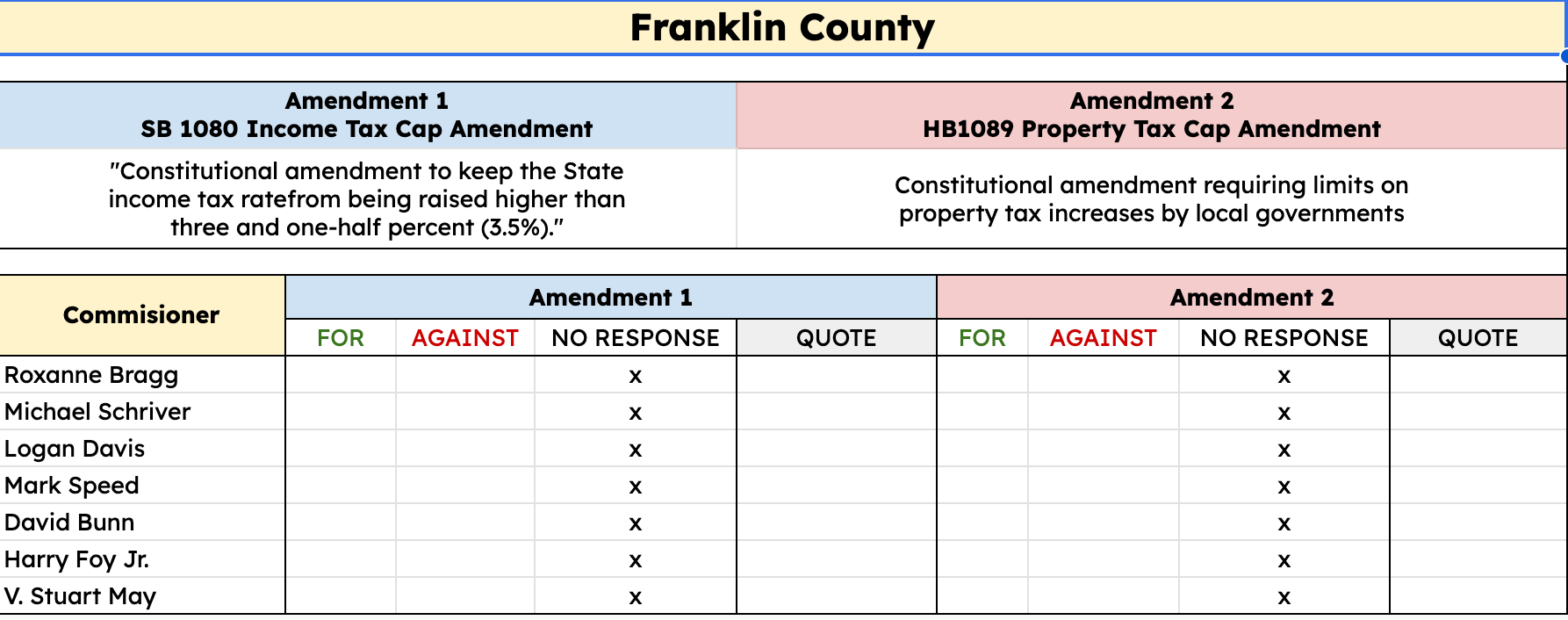
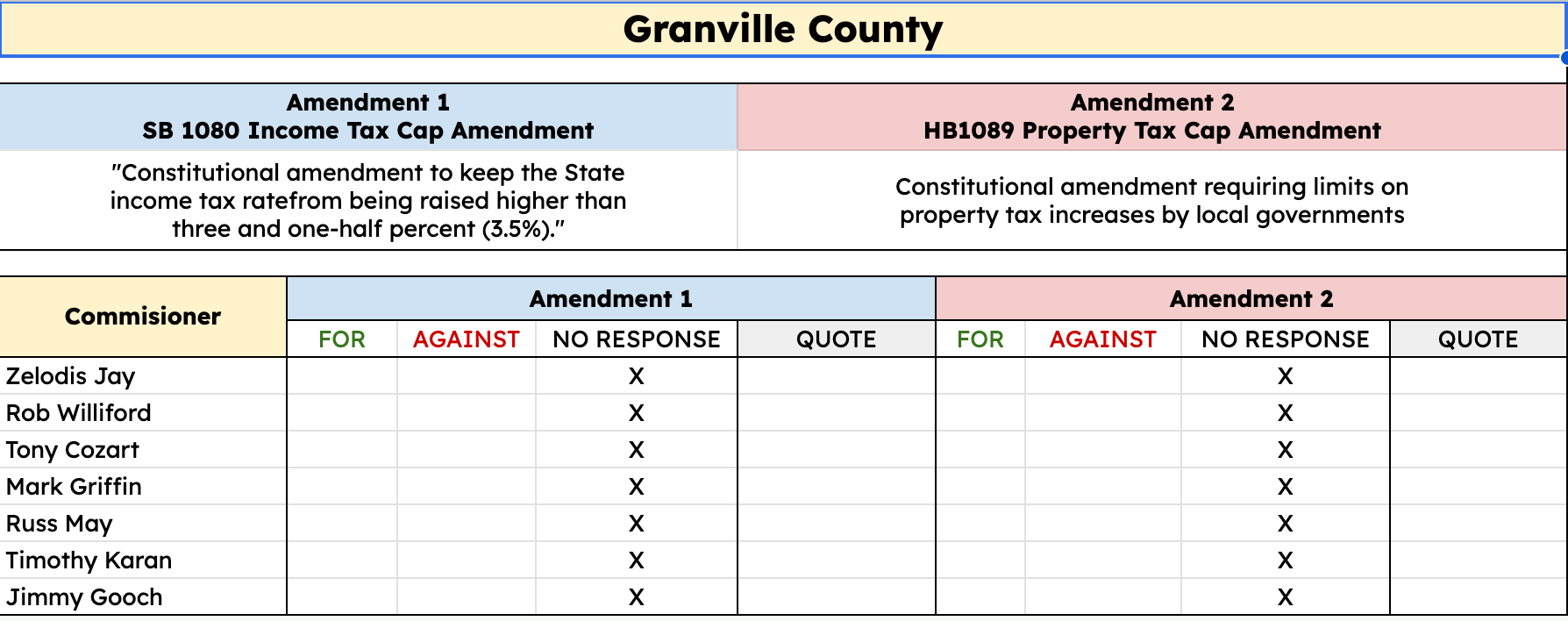
County Commissioners set property tax rates and approve their county’s budget each year. They understand better than most the tradeoffs that would have to be made if local property taxes are capped. Several North Carolina county boards including Wake, Durham and Orange have passed resolutions in opposition to the property tax cap amendment. We asked Franklin and Granville County Commissioners where they stand on these amendments. None was willing to share their position at the time of publication. We’ll keep asking and will update this story as commissioners respond.