What I Learned About Hunger and the People Feeding Franklin County

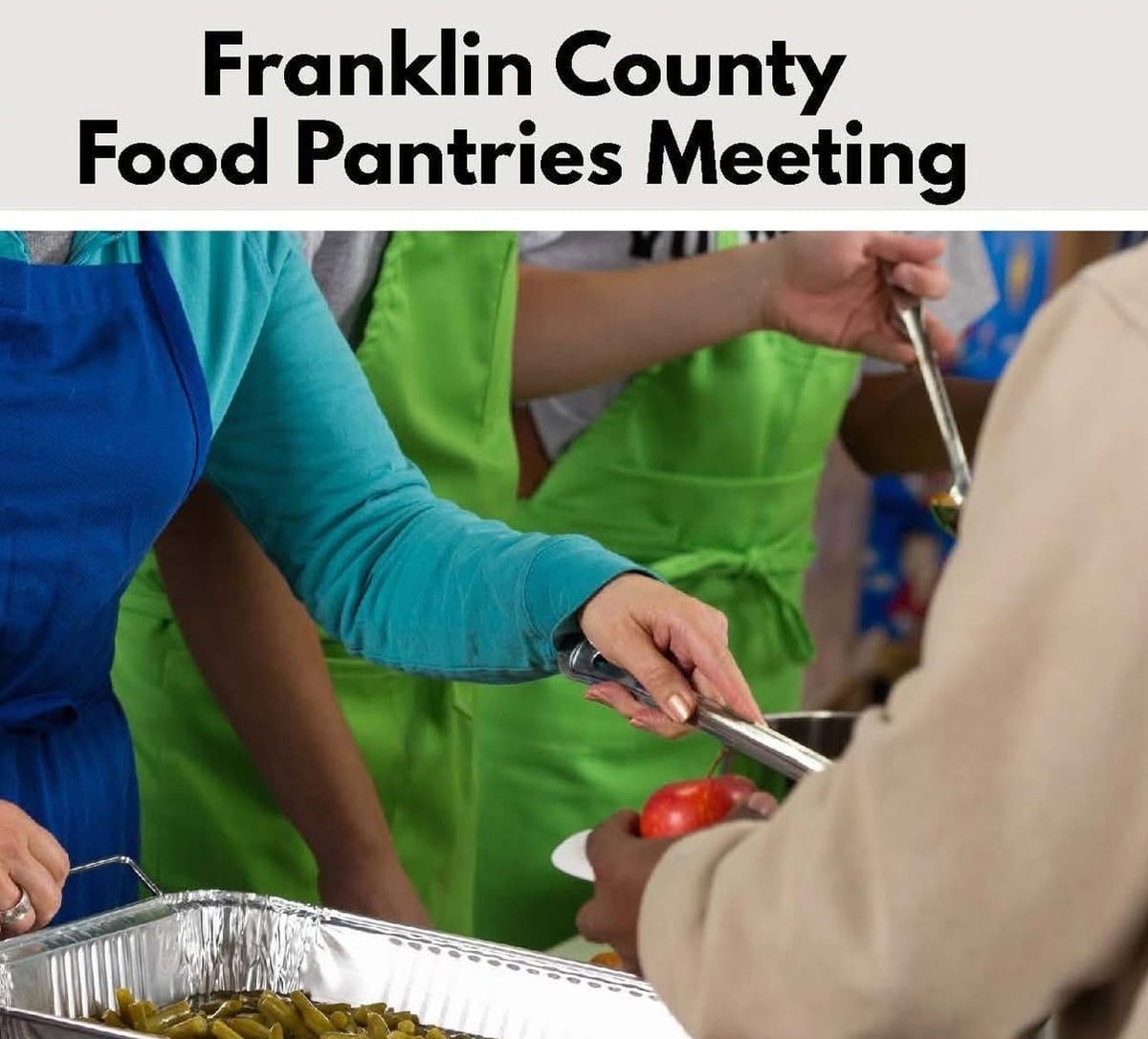
On Wednesday, July 29, I attended the Franklin County Food Pantries Meeting at the Franklin County Cooperative Extension Annex in Louisburg.
The meeting was convened by the Kerr-Tar Regional Council of Governments and brought together local pantry leaders, churches, the Food Bank of Central & Eastern North Carolina and Franklin County Cooperative Extension.

Funded by the Triangle North Healthcare Foundation, the goal was to learn about current food access challenges, identify gaps in services, share resources and explore collaborative solutions.
“This is why we are meeting here. We want to hear from you,” Earlene Middleton told participants. “What are some of the things that prevent you from working at your maximum, your best?”
Participants were asked to write on sticky notes what their program is and how many households or individuals they serve. This exercise was important because it showed just how much families depended on these local food pantries to feed their families.
For Example:
Journey Ministry Pantry serves more than 200 families during an average week. In June, it served approximately 1,100 families and 3,900 individuals.
Sowing Seeds served 679 households and reached 4,283 individuals in June through its pantry, satellite locations and mobile services.
Bridges of Hope Outreach Ministry served 126 vehicles and approximately 350 people during one recent distribution. A previous event served about 322 people.
Where Does the Food Come From?
Local pantries get their food from multiple sources, including:
- The Food Bank of Central & Eastern North Carolina.
- Food Lion, Wegmans and other grocery retailers.
- School and community food drives.
- Independent relationships developed by churches.
- Local farmers.
- The Franklinton Community Garden.
- Squash and zucchini are ready to harvest, with collards expected to follow. Pantries can volunteer, help harvest and receive produce to distribute locally
- Other charitable food providers.
Food Bank representatives explained that partner agencies receive training, undergo inspections and must follow food-safety and storage requirements. Those standards help retailers know donated food will be handled properly.
Joni McPhetridge from Sowing Seeds said they would travel approximately one hour and 45 minutes each way to God’s Pit Crew in Danville, Virginia. For about $150 per month, they received two pallets of nonperishable food per trip and sometimes perishable products.
Resources Shared With Pantry Leaders
Resources Shared With Pantry Leaders
Attendees learned about several resources that are available to support their mission, including:
- PORCH Franklinton coordinates monthly neighborhood food drives. Residents leave nonperishable food on their porches, and neighborhood coordinators collect and deliver it to a pantry.
- RAFI-USA provides information about SNAP changes, advocacy, farmer grants and support for faith communities through its Come to the Table program.
- TEFAP, the Emergency Food Assistance Program, provides USDA food for people with low incomes. Participants said supplies had recently been limited, although more food was expected.
- Food Finder allows residents to search for Food Bank partners by location. Its limitation is that independent pantries may not appear.
- FoodLink and Listen and Learn sessions provide Food Bank partners with training, including information about grant writing.
- Kerr-Tar regional maps and profiles show distribution locations, county food information and possible service gaps.
- Franklin County Cooperative Extension offers nutrition, food-safety, gardening, horticulture and farmer-connection assistance.
- The North Carolina Small Business Center Network provides nonprofit administration and grant-writing classes.
- The 4imprint One by One program is a source of promotional products, including bags, for qualifying organizations.
Food Pantries Are Getting Creative
The challenge for food pantries goes beyond just having food on the shelves– It’s about making sure that food is accessible and reliable for people who need it.
Sowing Seeds talked about bringing its mobile pantry to communities like Centerville, Stem and soon Kittrell, where residents do not have easy access to a grocery store.
Concord Baptist Church talked about using a client-choice model that allows residents to select the food they will actually use. This reduces waste and gives families more dignity than handing everyone an identical box.
Earlene Middleton talked about food and nutrition education. She explained that some organizations provide recipes when families receive unfamiliar produce. She used eggplant as an example because giving someone a vegetable does not automatically mean that person knows how to prepare it.
The Needs Behind the Scenes
As we all know, funding is the number one thing all food pantries need. Funding is necessary not just to purchase food but to cover operating expenses. The meeting emphasized that a basic request for “money to operate” is less useful than a detailed request for specific needs.

What the participants said they need:
- Food and protein.
- Commercial refrigerators, freezers and coolers.
- Vehicles, fuel and transportation assistance.
- Storage buildings, land and facility improvements.
- Pallet jacks, power jacks and conveyor equipment.
- Labels, bags, boxes and containers.
- Insurance and food-safety improvements.
A donation of meat is of little use if a pantry can't refrigerate it safely. A pallet of groceries can't reach a church without a dependable vehicle, fuel and people to unload it.
A Bag Is Not a Small Need When You Must Pack Hundreds of Orders
One challenge many who participated said they run into is having enough bags to pack orders.
Pantries need:
- Brown paper bags for dry goods
- Plastic bags for fruits and vegetables
- Stronger bags for large family orders
- Enough packaging to prepare food before a drive-through distribution begins.
*Prepacking is often necessary to keep hundreds of vehicles moving safely.*
Pantries’ go-to packaging includes:
- Brown bags sold in boxes of approximately 500 at Sam’s Club
- 55-pound brown paper bags from Atlantic Packaging and paper bags sold in bundles of approximately 500.
- Donated plastic shopping bags and reusable, washable bins that families return
*Some grocery stores are not allowed to donate bags.*
Local Pantries Need Succession Plans
I learned something at the meeting that I hadn’t thought about before, but it makes sense: Most local pantries depend on older adults who have performed physically demanding work for years. Local pantries need succession plans so younger volunteers can eventually assume leadership roles.
Participants from Concord Baptist said their volunteers have been transporting food for about three years and are growing tired.
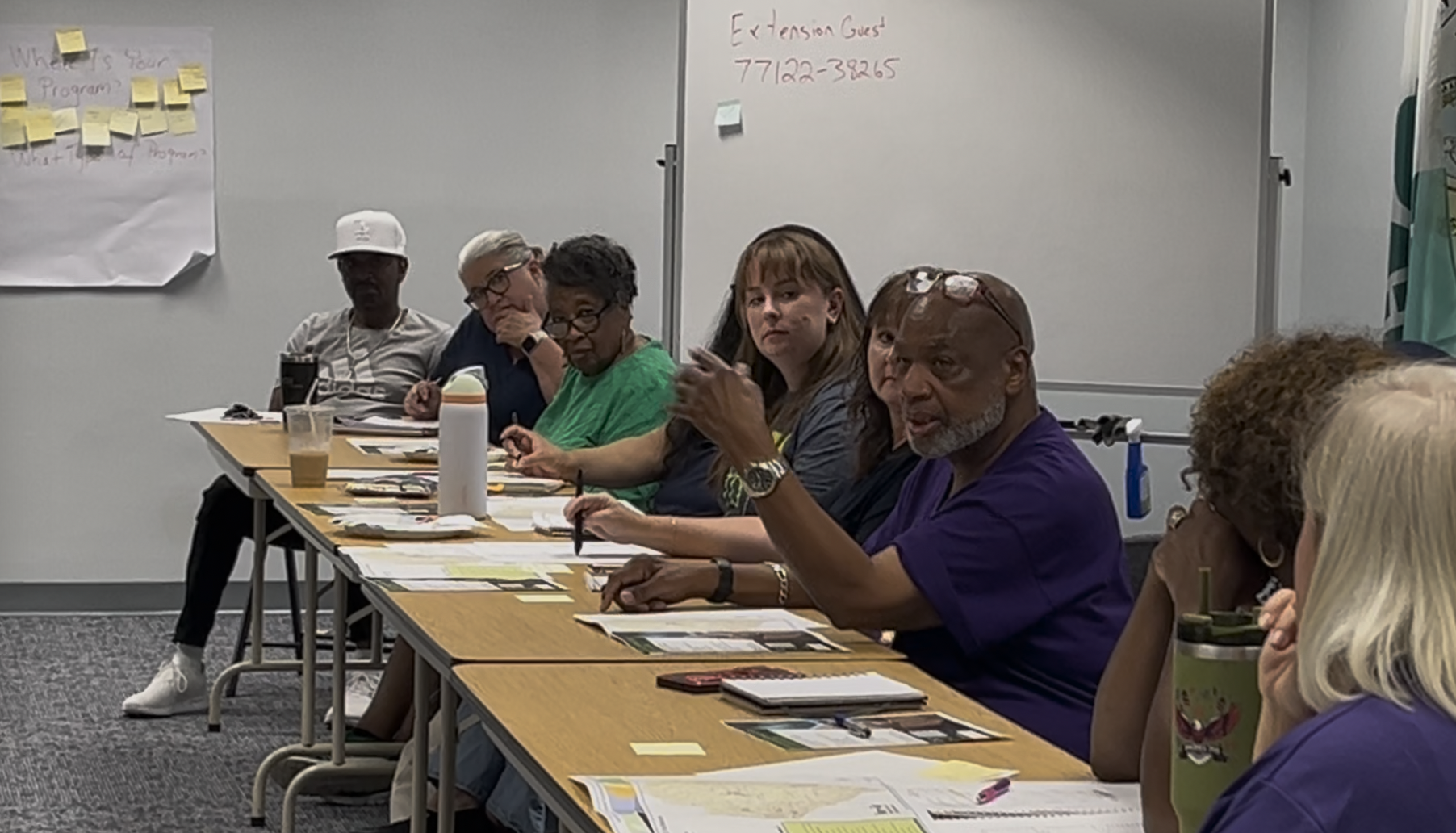
Velma Foster from Concord baptist Church talks about what their program is and what is needed
Others also raised similar concerns about volunteer shortages and the need for younger people to learn how pantries operate.
Attendees discussed potential sources of volunteers, including:
- High school community-service clubs.
- Students completing service hours.
- Athletic teams during their off-seasons.
- Church youth groups.
- College students.
- Civic and community organizations.
- SNAP recipients who may need volunteer hours.
SNAP Changes, Growing Demand and Voter Education
Before the meeting ended, Mrs. Middleton expressed concern that changes affecting SNAP could push more families toward emergency food assistance.
Key concerns included:
- Some residents could lose benefits or face additional requirements.
- Families will need clear information about how the changes affect them.
- Pantries should prepare for a possible increase in demand.
- Nonprofits may be asked to provide volunteer placements for some SNAP recipients
- Organizations need advocacy information from groups such as RAFI-USA
- Pantry leaders were encouraged to advocate for SNAP and TEFAP.
- An Orange County Department of Social Services presentation or recording about SNAP will be shared with participants.
She also asked if nonpartisan voter-registration volunteers could offer forms to residents waiting in food-distribution lines. Food Bank representatives did not object to this idea and meeting organizers promised to verify current North Carolina election laws and procedures before advising pantries to move forward.
Note: Hunger should never become a partisan issue. However, decisions about SNAP, TEFAP, local funding and food policy are made through the political process. Families affected by those decisions deserve accurate information and an opportunity to make their voices heard.
How Can Local Pantries Collaborate:
- Two or three organizations could apply for a grant together.
- A regional grant could fund shared transportation or refrigeration.
- Pantries could exchange information about food sources.
- Organizations could coordinate distribution schedules.
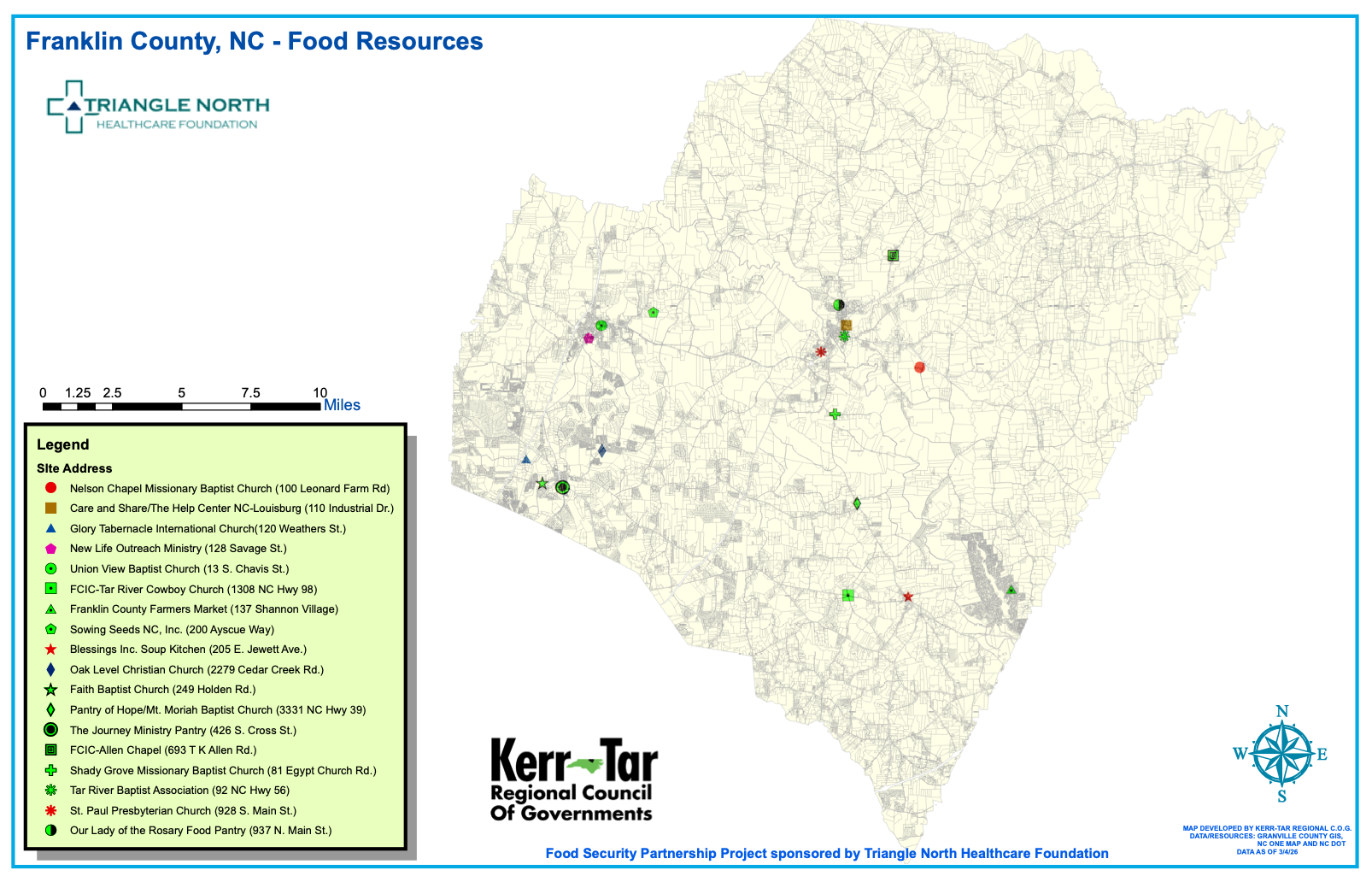
- Maps could identify communities with high food insecurity but few services.
- Pantries could refer residents to other organizations when they run out of food.
- Churches could share volunteers and equipment.
- Schools and youth organizations could create a volunteer pipeline.
- Farmers and pantries could build direct relationships.
- Regional meetings could spread successful ideas across county lines.
Community Call to Action

Franklin County’s food pantries are not waiting for someone else to solve hunger. They are driving trucks, unloading pallets, planting gardens, directing traffic, packing bags and serving thousands of people. But dedication cannot replace refrigeration, transportation, funding or a new generation of volunteers.
Local Pantries are asking you to:
- Volunteer to transport, sort, pack or distribute food.
- Encourage youth groups, athletic teams and student organizations to adopt a pantry.
- Start or join a PORCH neighborhood food drive.
- Donate new bags, boxes and clean packaging supplies.
- Ask pantries what they need before donating.
- Connect local farmers with food pantries.
- Help harvest produce from the Franklinton Community Garden.
- Donate toward refrigeration, vehicles, storage and fuel.
- Share accurate pantry schedules.
- Advocate for SNAP, TEFAP and local food access funding.
- Treat every person seeking food with dignity.
The people feeding Franklin County are doing extraordinary work, but they should not have to carry the weight of hunger alone. If food access is truly a community responsibility, then the entire community must step forward and help carry it.