What Could North Carolina's Proposed Constitutional Amendments Mean for Franklin County Schools?

This November, North Carolina voters are being asked to decide on two constitutional amendments that could shape how public schools and local governments are funded in the future. Read more about the proposed amendments here.
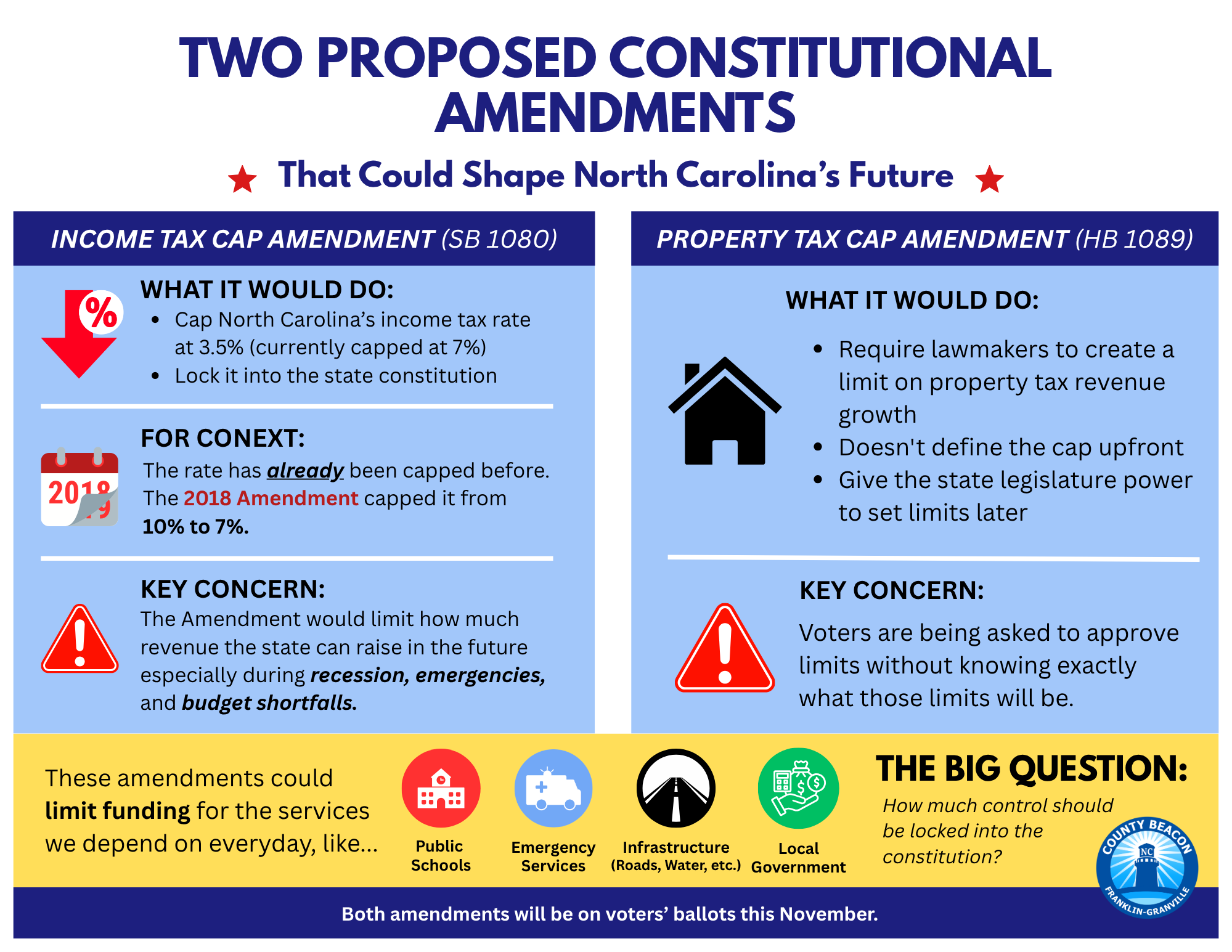
These proposals may sound simple, but they have become a hot topic among education advocates in Franklin County because they would limit the resources state and local governments have to support public schools.
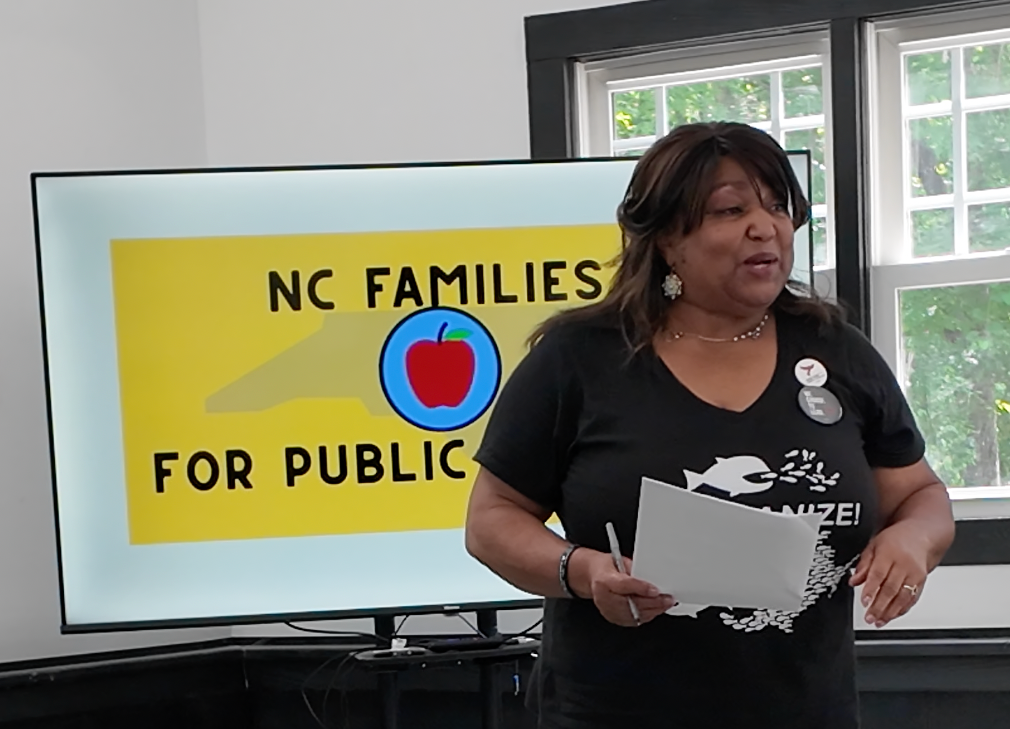
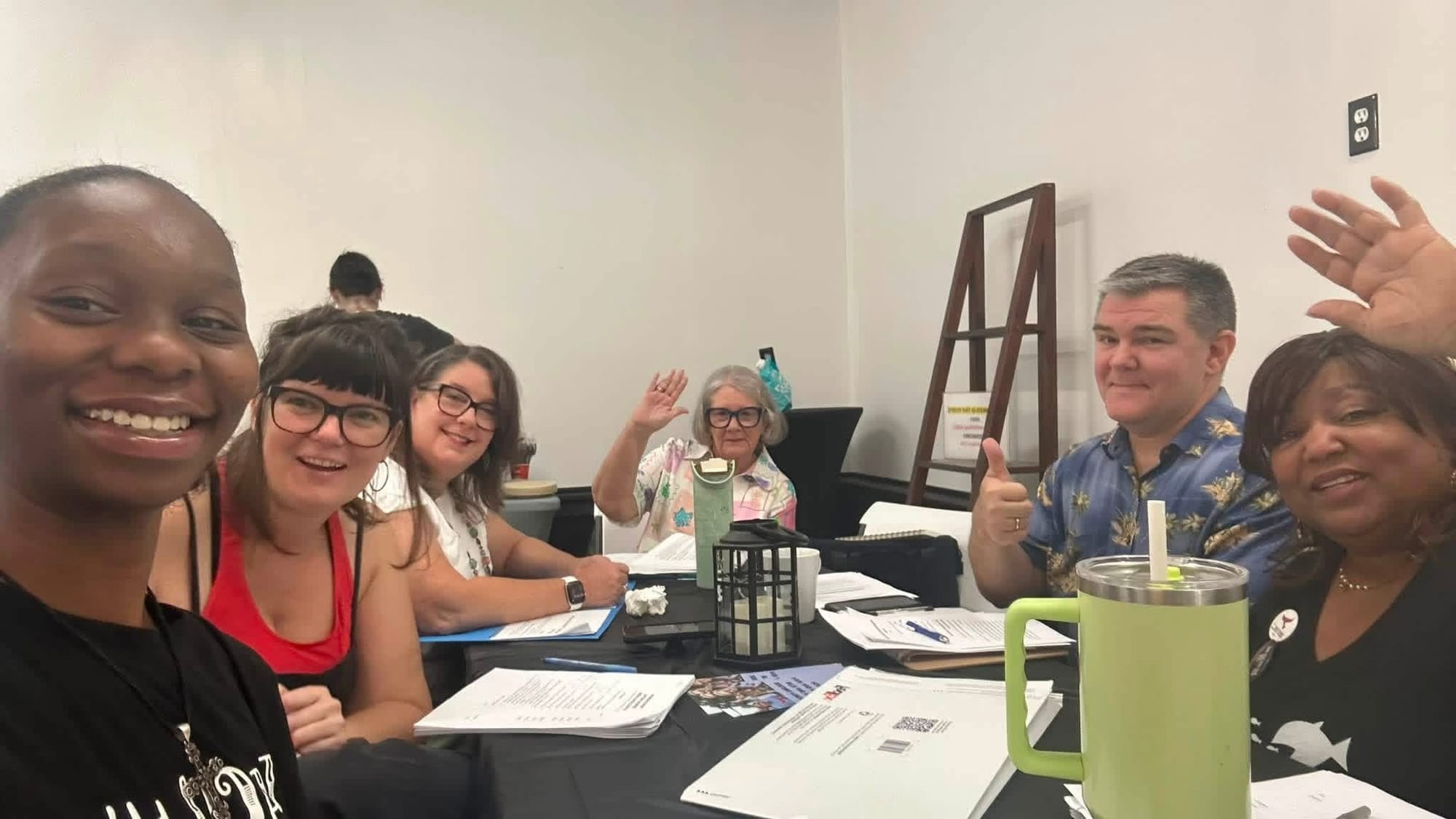
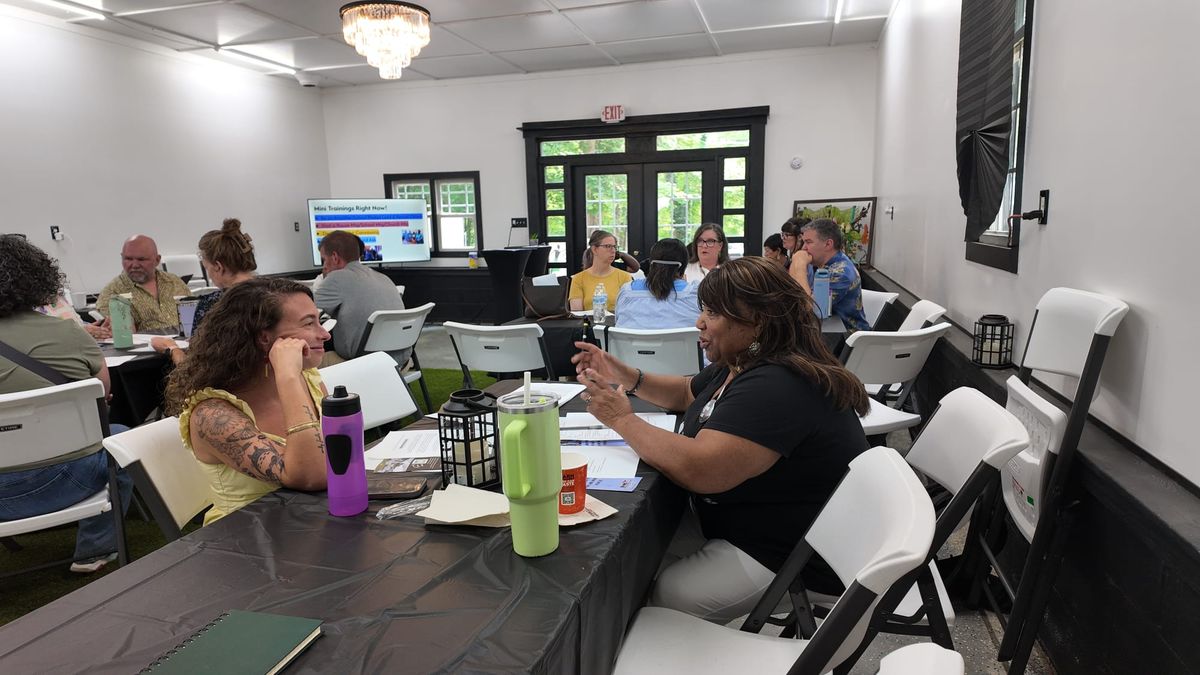
On August 1st, Franklin Public School Strong and NC Families For Public Schools hosted a public school community information session that brought together local educators, parents, and advocates to talk about how public schools are funded today, what the proposed amendments would do and why residents should understand the long-term effects before casting their ballots.
How Franklin County Public Schools Are Funded
Many families think that schools receive all their funding from a single source.
But as Franklin Public School Strong County Coordinator Tammy Petrosillo explained, public school funding comes from three levels of government:
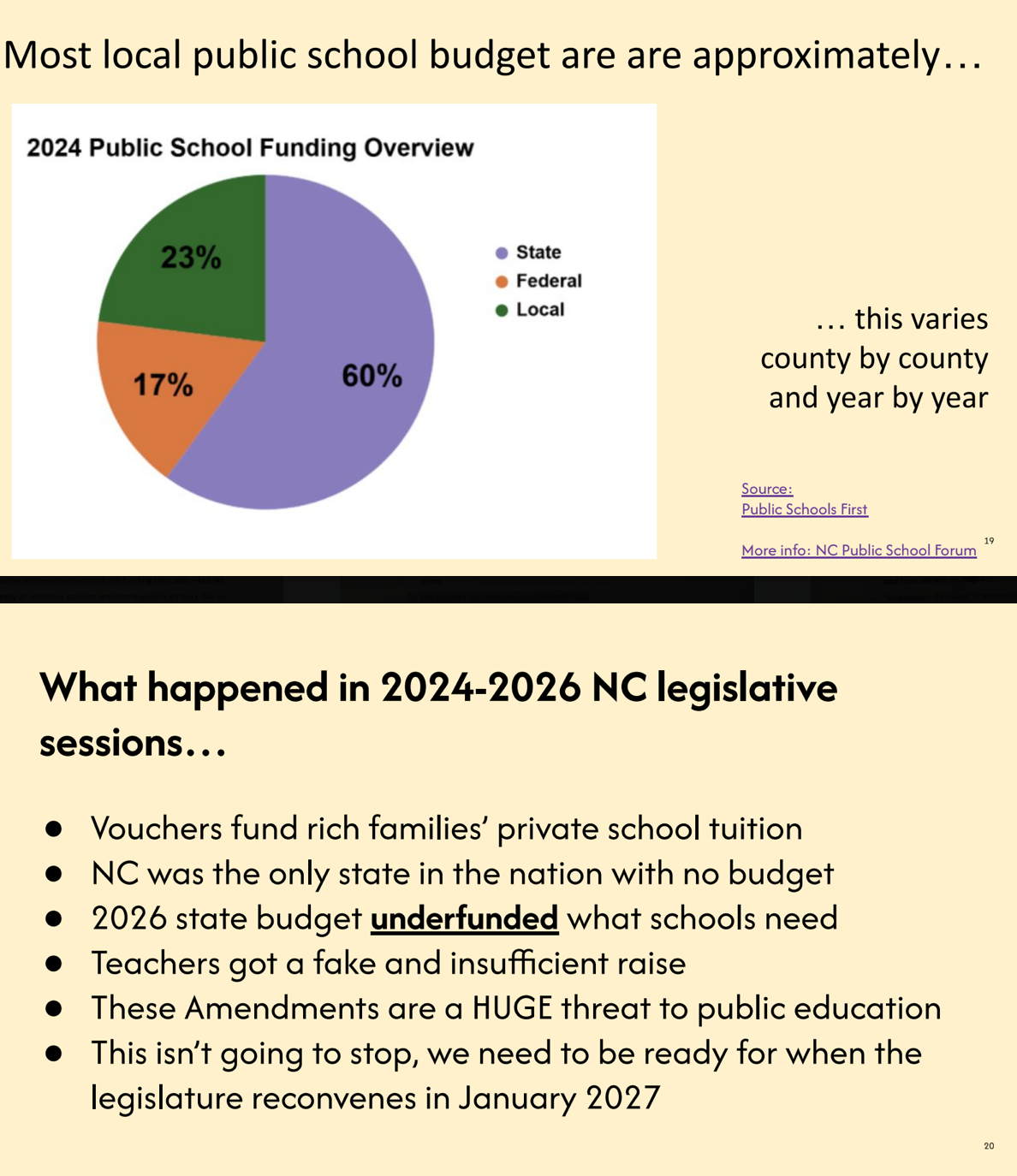
State funding generally supports
- Teacher salaries
- Employee benefits
- Classroom operations
- Instructional programs
County funding pays for
- School buildings
- New school construction
- Building repairs
- Heating and air conditioning (HVAC)
- School maintenance
- Parking lots
- Athletic facilities
- Local teacher salary supplements and longevity pay
- Franklin County
- Franklin County currently provides an 8% local teacher supplement
Petrosillo also explained that even though county funding accounts for about one-quarter of school funding, schools can't operate without it because it pays for the buildings and facilities.
Federal funding generally supports:
- Services for students with disabilities
- Programs for schools serving low-income families (Title I)
- Child nutrition
How These Amendments Could Impact Public Schools
If state and county revenue declines, lawmakers may eventually have to make difficult budget decisions. This could mean cuts to:
- Teacher salaries
- School operations
- Free school breakfast and lunch programs
- Community colleges
- Pre-K programs
- Mental health services
- Housing assistance
- Food assistance programs
Note: Franklin County is among North Carolina's fastest-growing counties, and organizers said population growth increases demand for schools, roads, emergency services, and public infrastructure.
Franklin PSS says that the Income Tax Cap proposed amendment is less about today's tax rate and more about limiting future flexibility.
During major emergencies such as hurricanes, recessions, public health crises, or other statewide disasters, lawmakers have historically been able to increase revenue temporarily if necessary. But under the proposed amendment, future lawmakers would be limited in how they respond because of the cap.
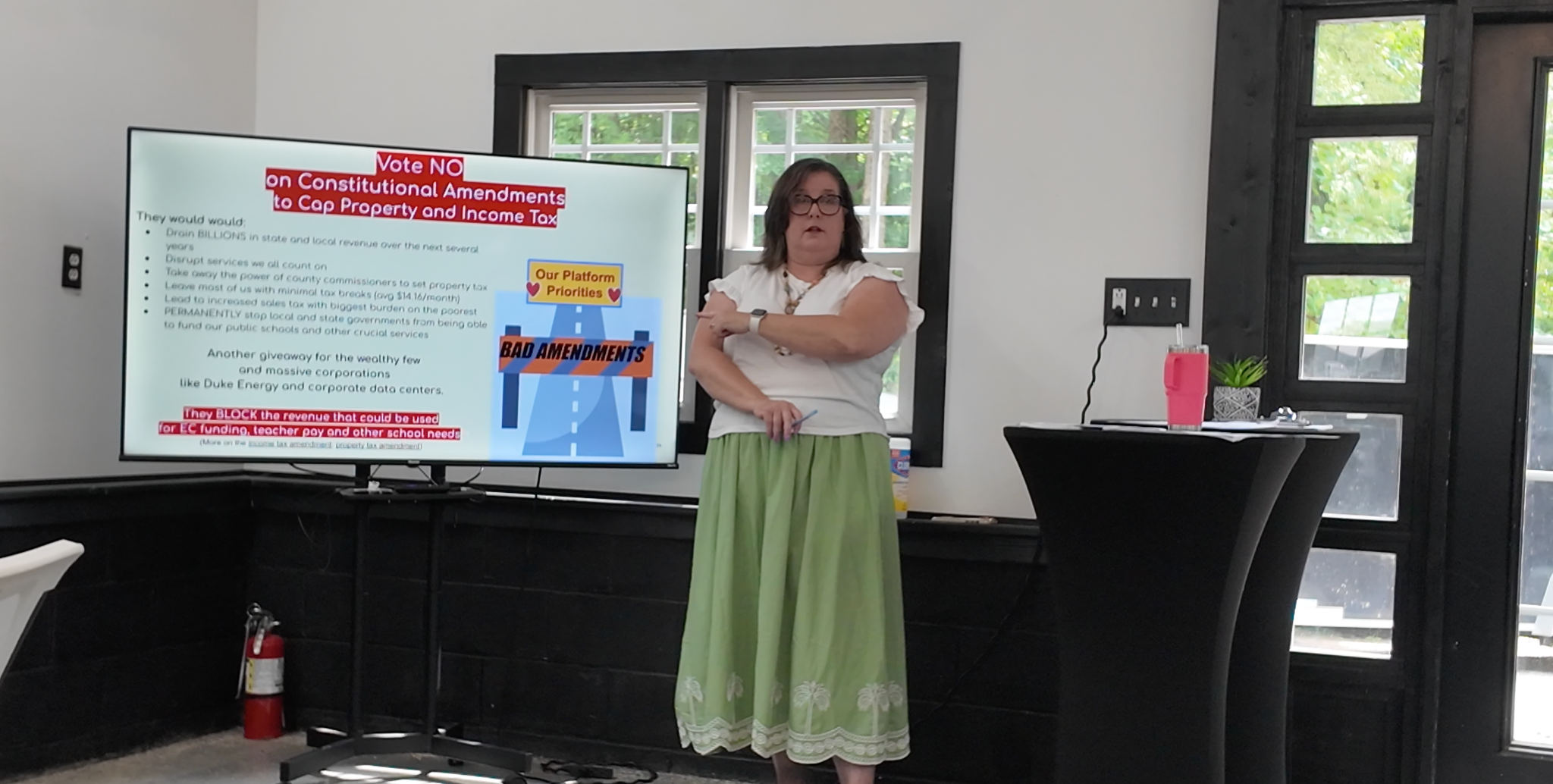
Tammy Petrosillo asked, "What are we gonna do when the next hurricane hits, the next recession hits, the next public emergency hits and our future state legislature can't respond?"
Franklin PSS also said that the proposed property tax cap amendment would shift more authority over property tax limits from local governments to the state.
Their concern is that lawmakers in Raleigh don't fully understand Franklin County's specific needs as the county continues to grow.
Petrosillo asked attendees to consider what could happen if local officials identify a need but no longer have the same flexibility to generate revenue locally.
Franklin County Families Are Already Dealing with Challenges
Sean Memolo, a Franklin County parent and member of Franklin Public School Strong's leadership team, shared his family's personal experiences and why he believes stable school funding matters.
“We are very active parents in the schools. We go to Halloween, to meetings and such and we enjoy being around the teachers. We enjoy being around the kids and other parents. But we have real issues, real concerns.”
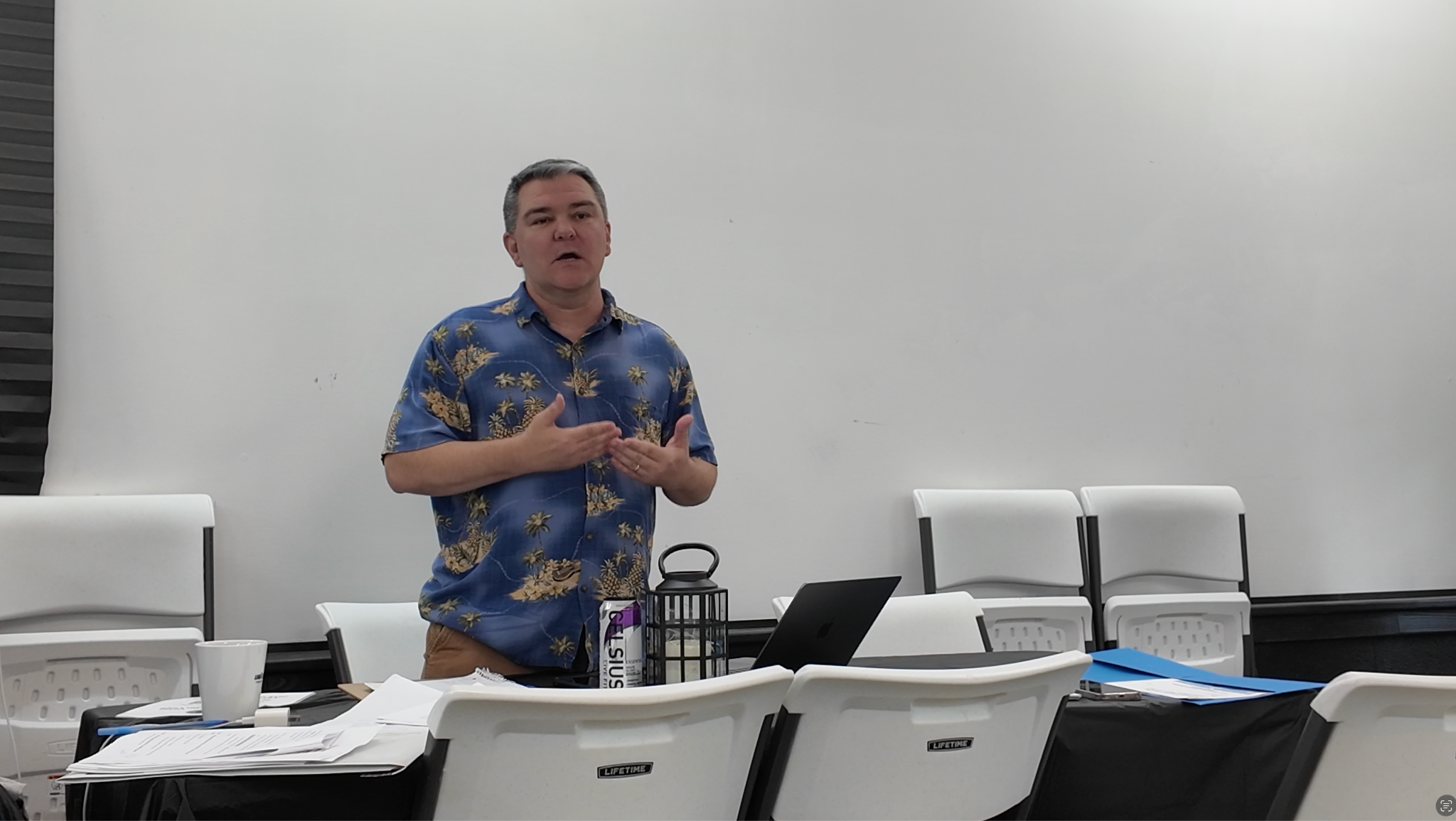
He shared:
- His daughter spent years without a permanent science or social studies teacher.
- Limited access to art classes.
- Teachers working multiple jobs.
- The importance of band and extracurricular activities in helping students discover their interests.
- Concerns about county funding for emergency medical services and public safety if local revenues decline.
What You Can Do
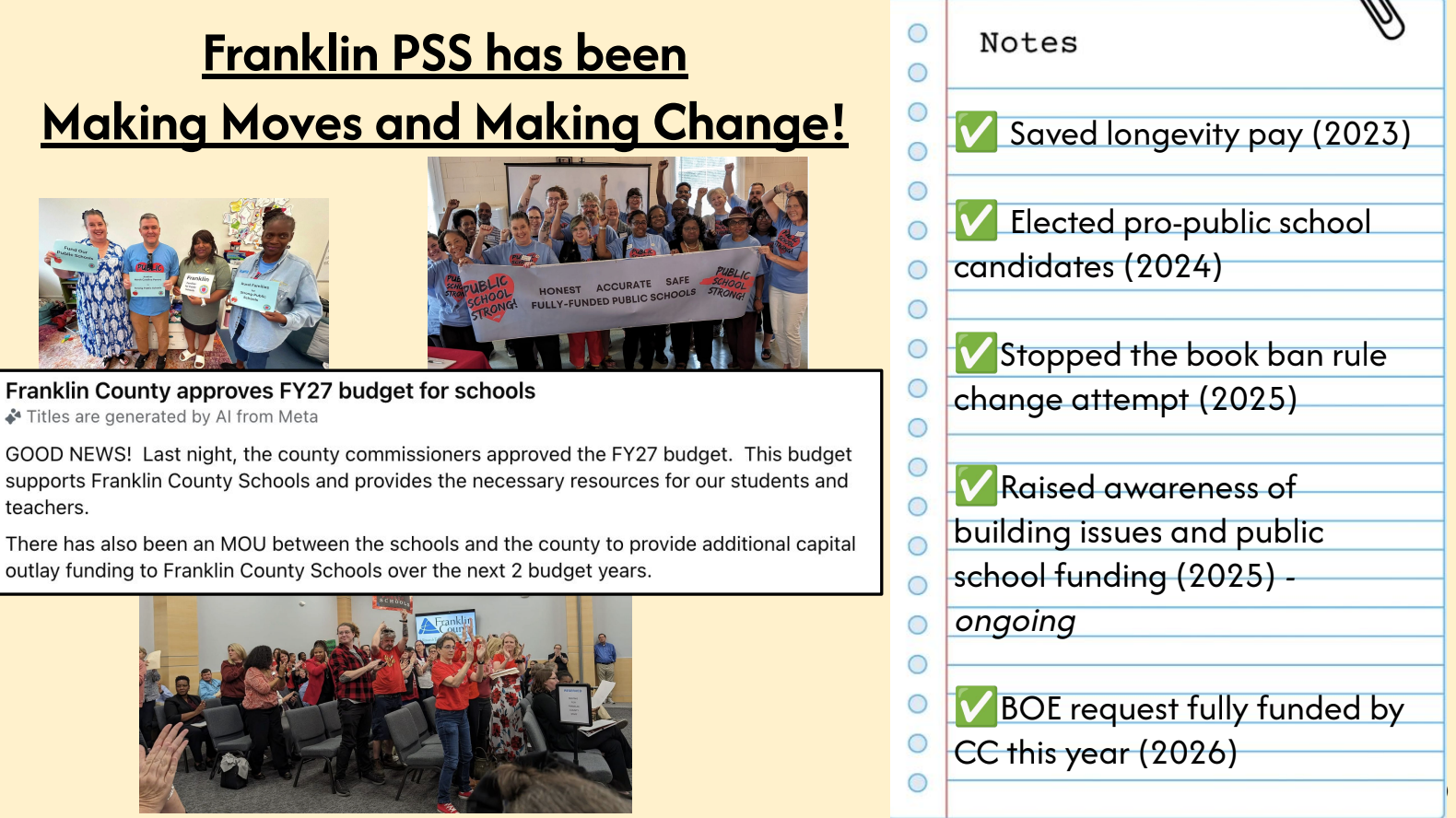
Franklin PSS has a track record of influencing local decisions and now they are asking more folks to become informed and stay involved by:
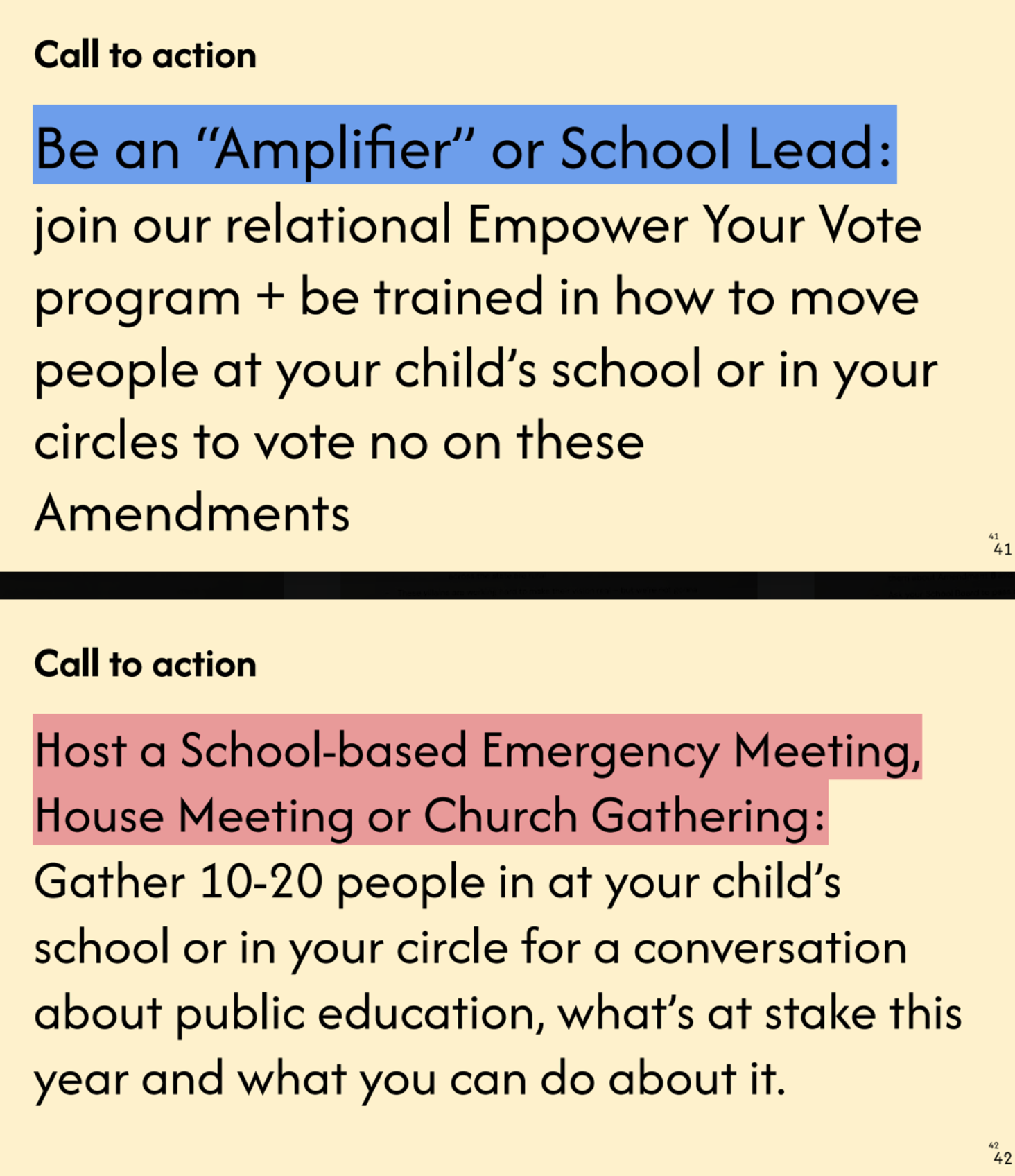
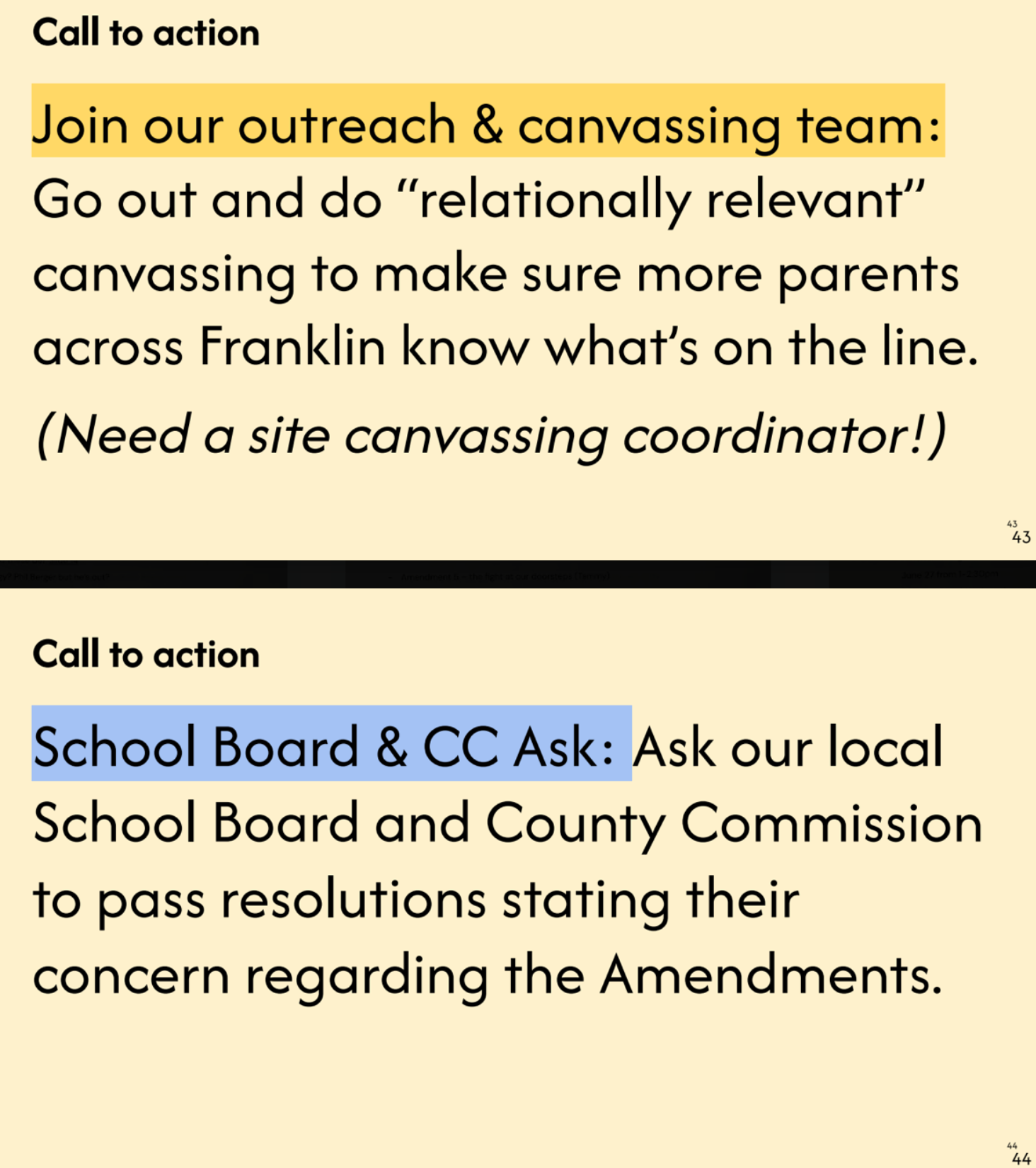
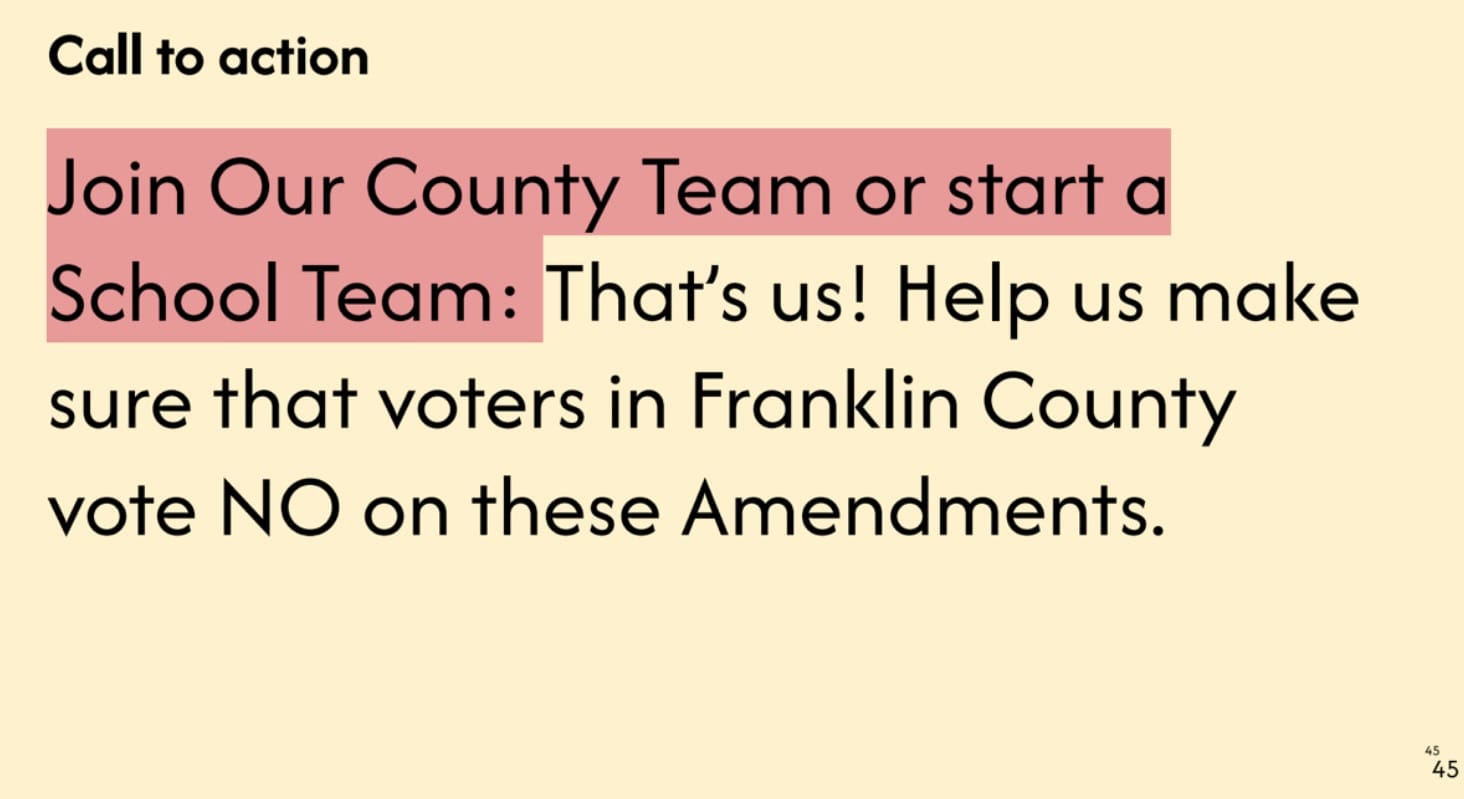
- Learning how public schools are funded.
- Reading the proposed constitutional amendments.
- Attending county commissioner meetings.
- Attending Franklin County Board of Education meetings.
- Discussing the amendments with family, friends, and neighbors.
- Contacting local elected officials with questions.
- Sharing accurate information within your community.
- Participating in the November election after reviewing the proposals yourself.
You can check out the resources that were made available at the lunch and learn below:
SIGN THE PLEDGE to take action to support public schools: https://dhnc.info/NCFPS-Pledge
Why This Matters
The proposed constitutional amendments have sparked strong opinions across North Carolina because they involve more than taxes. They touch on how governments pay for schools, public safety, infrastructure, emergency response, and other essential services.
For Franklin County, where continued population growth is increasing demands on classrooms and county services, these decisions could impact future conversations about teacher recruitment, school construction, facility maintenance, and local budgets.
Tammy Petrosillo told attendees, "We hope you've learned enough about this to understand the impact these amendments would have on our communities, and you will take this information back into your social circles and share it with everyone else."
No matter where you stand on the amendments, one thing is clear: an informed community is better prepared to make informed decisions. Before voting this November, take time to read the ballot language, review multiple perspectives, attend local meetings if you can, and ask questions. The future of Franklin County Schools, and the way public services are funded, will continue to be shaped by the choices voters make.